
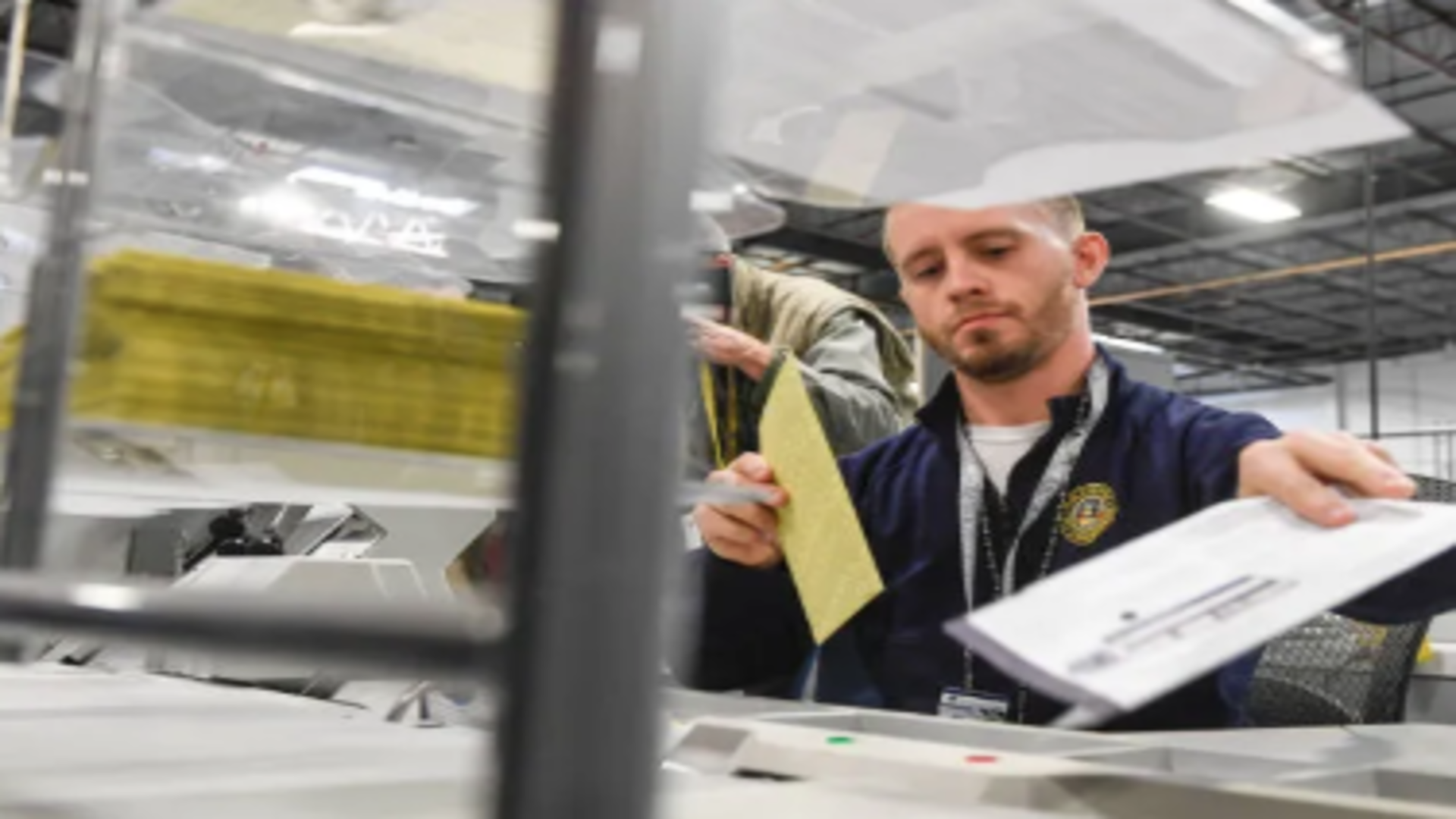
Not to hit you straight out of the gate with numbers, but these are substantial: One-third of election officials have quit since 2020. Why? We’ve mentioned burnout and the job’s instant change from the quiet “number nerds” hidden in an office no one can locate, to one of public attention and scrutiny, and relatively low salaries. The average election administrator makes about $50,000 a year. It’s much lower in smaller districts where many election officials are just part-time employees.
Recent survey work of 650 local election officials undertaken by Reed College shows four out of ten are eligible for and considering retirement. Sixty percent of those considering retirement are thinking about departing before 2028.
And to drive home the workforce point fully: 64 percent of the officials polled said that it was more difficult to hire for full-time staff now than in the past, with lack of experience and hard skills among candidates some of the biggest issues named.
But anecdotally, at least, not all is doom and gloom. “While the burnout is real and the turnover is real, I think we’ve also seen, on a positive side, interest in the role from people and places that we haven’t before, in terms of people saying, ‘You know what? This is something that I do care about, and this is something that I want to invest in as a career,’ ” Justin Roebuck, the chief election official in Ottawa County, Michigan, told Declare.
He said he’s hired several interns recently that caught the bug. “(They’ve) kind of gotten a taste of this and said, this matters, this is important.”
Are there examples of Roebuck’s experience happening at scale? We started to dig into the evidence available.
From one perspective, there certainly is some infrastructure for attracting and training up a new generation of election professionals. As the Bipartisan Policy Center summed up in a report:
… faced with heightened turnover, election administrators are investing in training for new officials. Forty-three states currently have statewide training available to election administrators. Two more states— Rhode Island and Nevada—are developing training programs, and at least six states have created or reinstituted statewide training in the last five years. Election officials are required by law to attend training in about half of the 43 states, and about half of the statewide trainings include training specifically for new officials. All of this is cause for optimism for the continued resiliency of our electoral system.
The University of Minnesota awards a certificate in election administration, for both existing professionals and aspirants. The University says students will gain the following:
- Knowledge of the laws, technology, and debates shaping elections today
- Ability to respond effectively to the rapidly changing landscape of elections
- Career-enhancing connections to peers and leaders in the election field
- Academic credential from the Humphrey School of Public Affairs, one of the country’s top professional public policy schools.
Declare checked in with the university a couple of times amid the holidays to learn the progress and composition of enrollment numbers, but hadn’t received any data at the time of publication.
But one can hope it resembles something like the progress of National Poll Worker Day, which was established by the federal Election Assistance Commission in 2020. In 2025, an EAC official specifically named under-40 poll-worker recruitment as a goal — mirroring the broader hope of attracting a “next generation” of talent in the election profession.
“Bringing in a new generation of poll workers is essential,” said EAC Vice Chair Thomas Hicks. “There is no better way to get involved, meet your neighbors, and make a meaningful difference in your community. We also know the positive impact it has when voters see their neighbors, friends, and members of their community serving in these positions.”
And to that point, former Grant County, Kentucky, Clerk Tabitha Clemmons advised, “It is important to have experienced professionals in these important roles to ensure laws and regulations are followed and institutional knowledge doesn’t leave with them.”
So it seems the perfect ingredients may be a mix of the election generation that knew life before 2020, and a new generation that embraces the new look of the election clerk.
Last month, we met Garrett Glover, a Pinal County, Arizona, elections assistant who was bit by the bug in high school. Now at 25 years old, has worked his way up through the clerk’s office there to be the de facto liaison to the state house and senate in Phoenix. “I was blessed. We hired him just knowing that’s where his heart is,” Dana Lewis, the Pinal county recorder, told Declare.
Glover said he was bit by the bug before 2020, but his excitement over the gig has only grown since COVID. Perhaps there are signs that others like him are jumping in the election waters, at a time when the waters seem to need a fresh take.