

Here are a couple of questions for you:
Thinking back to at least Barack Obama’s first election as president, and perhaps even more distant to the turn of this century, have the stakes of politics felt . . . well, almost fatefully high to you? Like the world is performing a continuous trapeze act over a pond of crocodiles?
When was the last presidential election year that you remember not being framed as “the most important in history?” When was the last time that national politics seemed normalish to you — not “unimportant,” because our country’s federal government is always responding to or managing (or creating) problems that affect people’s lives, but instead something like “sane” in the process of conducting those affairs?
(Don’t doubt yourself if you answer quickly. I responded “yes” and “can’t recall” immediately, too.)
There surely are lots of reasons why the political process — the never-ending campaign season plus brief interludes for governing — seems so agitating. But one that’s overlooked in the public square is implied by the questions above: the vanishing influence of federalism, both practically and in how Americans put politics into perspective.
Our nation’s government is literally a system of federalism. One way to think about it is that there exists a federal government for certain issues that it’s obligated or uniquely suited to address; and then dozens of state and many more thousands of local governments to deal with the rest. The old saying that “the government closest to the people serves the people best” applies here. It’s not in America’s psychological interest for one central government to assume more and more responsibility in circumstances that maybe it shouldn’t — especially if a lower level of government is equipped to handle it.
Yet consider the reality. Supreme Court Justice Neil Gorsuch quipped that as recently as a century ago, the whole United States Code of laws could fit inside just one book, whereas today it occupies an entire wall inside his office. Similarly, the Federal Register, the official journal where federal regulations are published, was 16 pages long early in the 21st century; in modern times, Gorsuch said, the federal government adds 60,000 to 70,000 pages to it every year.
It’s fair to say that the complexity of the world has exploded during the last several decades, and that it’s Washington’s place to respond to certain developments in technology, world events, social norms, and the like. It’s not the page counts alone that matter — it’s what’s written on the pages that tells us whether a certain law or regulation is the federal government’s business. Still, there’s no argument that government power grows with the number of statutes and rules that it controls; and a more powerful government is a bigger political prize.
If it weren’t, then our presidents wouldn’t talk like it is. In 2014, President Obama said that “I’ve got a pen, and I’ve got a phone” to act if Congress doesn’t. And in 2016, Donald Trump said that “[n]obody knows the system better than me, which is why I alone can fix it.” That is American politics now: Every four years, voters elect someone who winds up just on the winning side of 50/50 to command 100 percent of a behemoth that even Supreme Court justices strain to understand.
Neither major party has a fundamental commitment to governing with all the eggs in several baskets instead of one. Democrats, having been the party of the New Deal and Great Society, favor “the concentration of power in the federal government” over state governments 2-to-1, according to Gallup. Although historically Republicans have been the inverse, federalism has vanished from the party platform. In 2016, their preamble read: “We believe [that] our constitutional system — limited government, separation of powers, federalism, and the rights of the people — must be preserved uncompromised for future generations.” No longer.
If anything, it’s now Democrats who are circumstantially advocating for a federalist vision of government. Who will advocate for it instead because the vision is correct, not just convenient — if for no other reason than it will help stop America from driving itself nuts?
***
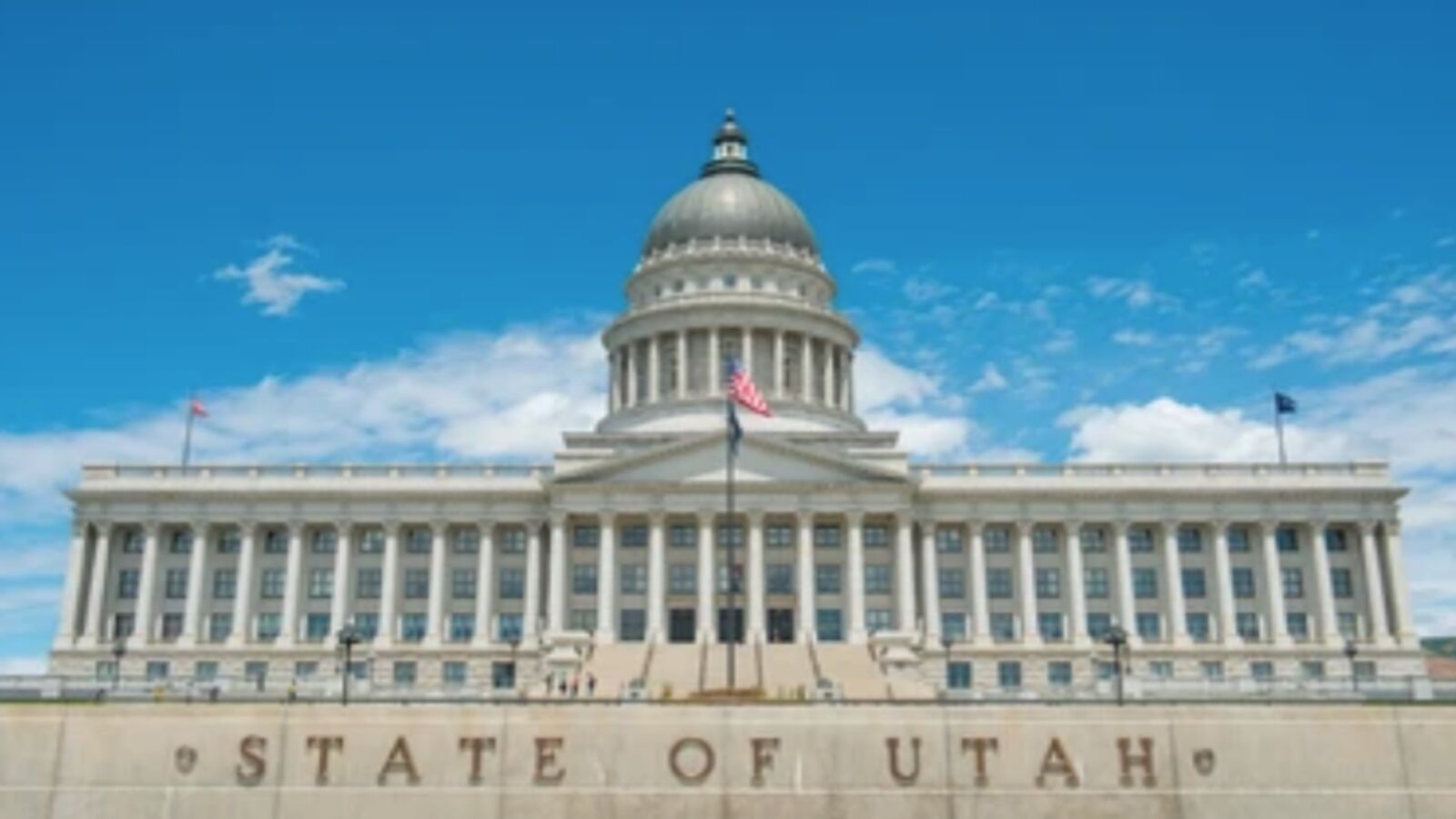
“If governs, who governs?” asked Utah state senator Keven Stratton during a recent presentation about his state’s approach to federalism. The directness and loose grammar of that question make it sound like a prompt from a philosophy course. But the real-world way in which Stratton and his colleagues in the Utah legislature apply it makes his state a case study worth highlighting — whether you’re a legislator in a different state, a reflective member of the federal government, or a voter considering all the possible outlets for political change.
Thirteen years ago, Utah’s legislature formed an official Federalism Commission, designed to create a process for responding to federal laws that the Commission identified as encroachments upon its state’s jurisdiction. Specifically, if the Commission makes such a finding, it may recommend that the governor call a special legislative session, dedicate legislator and staff time to establishing a formal dialogue with relevant federal entities, and coordinate with other state legislatures confronting the same issue.
Heady stuff. But the speaker of the Utah house in 2013, the late Rebecca Lockhart, took it as “serious” stuff.
“We need to find out, what is it, what are the things that as states we are sovereign over — if there’s anything anymore? If there’s anything?” she said in her opening remarks of the commission’s first meeting. “This is going to sound radical, but: If there isn’t anything, then what’s the point? If all we are is bureaucratic subdivisions of a federal government, I’m not sure that’s a place where the states want to be, nor a place where the states should be.”
Naturally, the state-federal issues of greatest tension in Utah are the management of public lands and related environmental concerns, as they are throughout much of the Western United States. But instances of federalism on other policy matters, of interest regardless of geography, include Massachusetts and health care reform; Mississippi and education reform; and how state governments managed public activity, or the process of “opening up,” during the COVID-19 pandemic.
Elections are a notable fit here, as well, given the language of the Constitution’s Elections Clause and 10th Amendment that empowers states to take the lead.
Utah’s model guides lawmakers to evaluate and act based solely on their perception of whether Washington has reached too far in such areas. “We’re so quick to jump to what the right answer should be,” said Rep. Ken Ivory, an original member of the Federalism Commission and champion of its expansion, during the presentation. “Who has the authority to decide is the very first question. [America’s] founders intended that.”
The Commission’s most broadly applicable contribution to date is its support for the Federalism Index Project at Utah Valley University, which tracks major legislation, regulations, and state actions that affect the balance of power up-and-down the levels of government. Increasing federalism education, both in the education system and for Utah’s members of government themselves, has become a key part of the Commission’s work.
This past year, Gov. Spencer Cox signed legislation to expand the Commission’s membership and the number of bills it can initiate, and to direct UVU to organize an annual, nonpartisan federalism conference among state legislators. Ivory said that the National Federalism Initiative, as it was branded, targeted invitees from a mix of red, blue, and purple states that already had a legislative committee or similar body for federalism issues.
“There is a common interest in having these kinds of dialogues and communications with Congress, where if you don’t like the policy coming from a Democratic or a Republican administration, you have a place and a way to communicate those things to whoever is in power inside the Beltway,” said Derek Monson of the Sutherland Institute, a partner of the NFI.
***
At the state level, interest in federalism across the political aisle is emerging in other contexts. In December, the National Conference of State Legislatures convened an inaugural Assembly of State Legislative Leaders, a bipartisan group of 40 legislators who approved a declaration on “Federalism Restoration and State Empowerment.” Notably, the declaration included a clause recognizing the legislative branch as “the cornerstone of representative democracy,” in addition to language about federalism’s role in “strengthen[ing] America’s ability to craft responsive policies in a changing world.”
Governor Kevin Stitt, a Republican from Oklahoma, has used his chairmanship of the National Governors Association to advocate for federalism — and backed it up by questioning the deployment of one state’s National Guard to another state over the objections of that state’s governor. “If you think about it, if we get back to this idea of federalism, that the states are the laboratories of democracy, that’s what our Founding Fathers envisioned,” he said on a podcast last month. “And when we try to say there’s a one size fits all from Washington, D.C., and they control all the money and try to bleed it out to the states, or try to appropriate it out to the states, what you get is you get pendulum swings, from the Obama administration to Trump, and then back to Biden, and then back to Trump. That’s not healthy for anybody.
“I’m shocked that the Democrat governors also agree with me on a lot of these things.”
Perhaps they do because, as Yale Law School professor Heather Gerkhen has put it, “federalism has long been the darling of conservatives. But that’s a mistake because federalism is for everybody.”

Stephen Richer’s Testimony to House Judiciary Subcommittee on Noncitizen Voting