

Poll analysis · Declare / Opinion Diagnostic
NC Republicans Favor State to Federal Election Control 63-18
Even with context about North Carolina’s election administration, the finding sticks out as national debates over federalism rage.
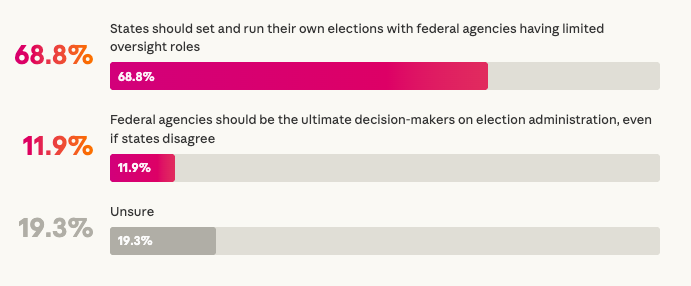
A survey from Opinion Diagnostics prepared for Declare has found that Republican voters in North Carolina significantly prefer state control of their elections to the buck stopping in Washington, D.C., as the Trump administration and congressional Republicans have pressed ahead with ambitious voting reforms.
Sixty-three percent favored the statement, “States should set and run their own elections with federal agencies having limited oversight roles,” to the option, “Federal agencies should be the ultimate decision-makers on election administration, even if states disagree.” Just 18 percent of Republican respondents chose the latter selection. Among all registered voters in the polling sample, the split was 69 to 12.
Election administration in the Tarheel State has a recent partisan context. In 2024, a veto-proof majority of the Republican-controlled legislature there enacted a law transferring oversight of the state’s election board from the governorship, which has been Democratic-controlled except for one term since 1993, to the state auditor, who is a Republican. The board now comprises a 3-2 Republican majority, after the auditor appointed new members last year. It subsequently has cooperated with the Department of Justice’s state-by-state scrutiny of voter registration lists nationwide.
Regardless, the poll finding is additional evidence of the strength of a long-standing conservative principle associated much more with Republicans than Democrats. Support for federalism continues to distinguish members of the former party from the latter, even as the Trump administration, a Republican one, has attempted to centralize power in the executive branch, including over the election system.
The Declare/Opinion Diagnostics survey found some notable areas of agreement between North Carolina voters in the two parties, however. Seventy-seven percent overall said they support the state’s “voter ID requirement,” including 65 percent of Democrats. The part of that requirement applying specifically to in-person voting was approved in a constitutional ballot measure with only 55 percent in 2018 (state law applying to absentee ballots exists elsewhere, in statute). An amendment proposal for photo ID that applies to all voting is on the ballot this November.
Additionally, 74 percent of all respondents said that North Carolina’s current 17-day period of early voting should be kept (53 percent) or expanded (21). Republicans split 56-40 on that question, with the latter favoring a shorter window.
For topline numbers, click here.
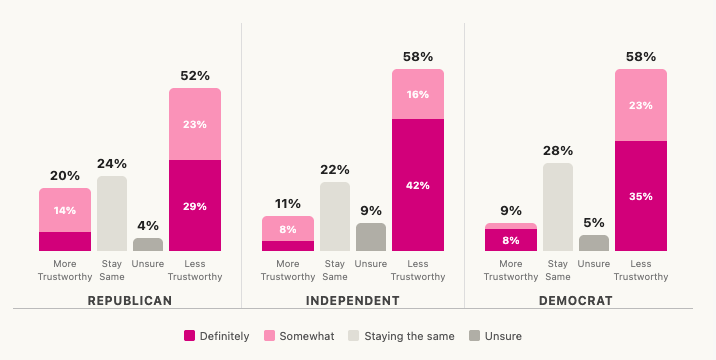 Cygnal · PennsylvaniaTo Pennsylvanians, Nation’s Elections Face Bipartisan Credibility Problem
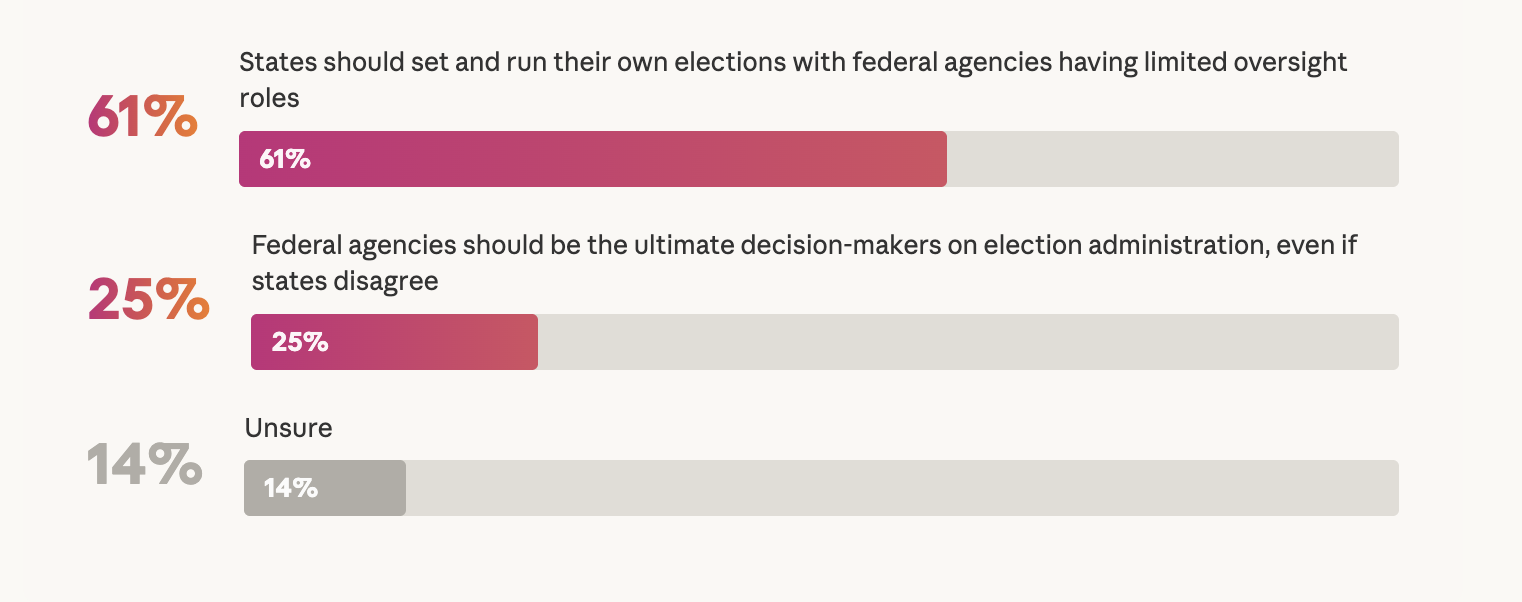 Deeproot AnalyticsState Control of Elections Favored in Giant National Survey
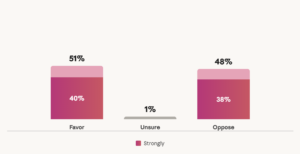 The Tarrance Group · NevadaNevada Voters 50/50 on Supreme Court Issue Argued This Week
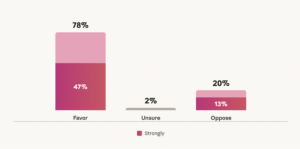 The Tarrance Group · Wisconsin78% of Wisconsinites Back ‘Pre-Processing’ of Mail Ballots
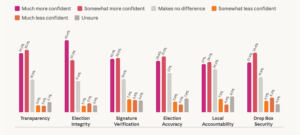 Cygnal · ArizonaKnowing the Process Builds Trust in Arizona, Declare/Cygnal Poll Finds
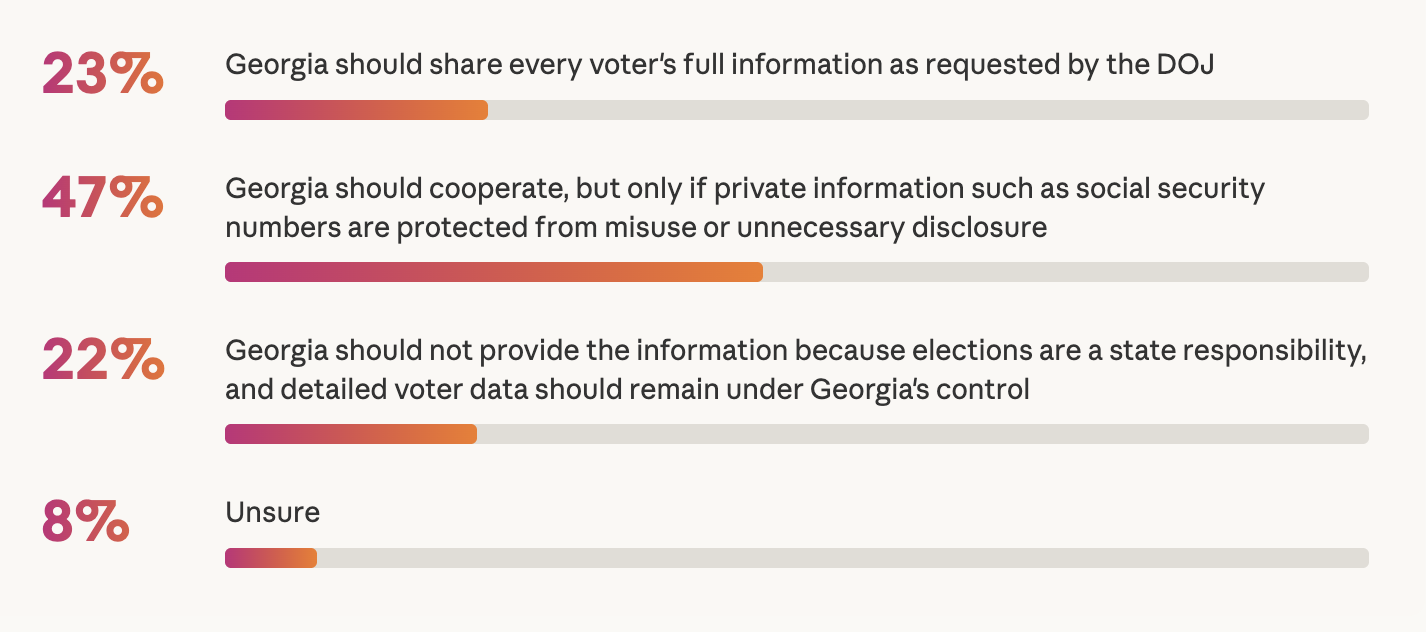 Cygnal · GeorgiaOnly 23 Percent of Republicans Support Full DOJ Voter Roll Request, Georgia Poll Finds