

Poll analysis · Declare / The Tarrance Group · Nevada
Nevada Voters 50/50 on Supreme Court Issue Argued This Week
The case Watson v. RNC will determine the legality of counting late-arriving ballots postmarked by Election Day in Nevada and 13 other states.
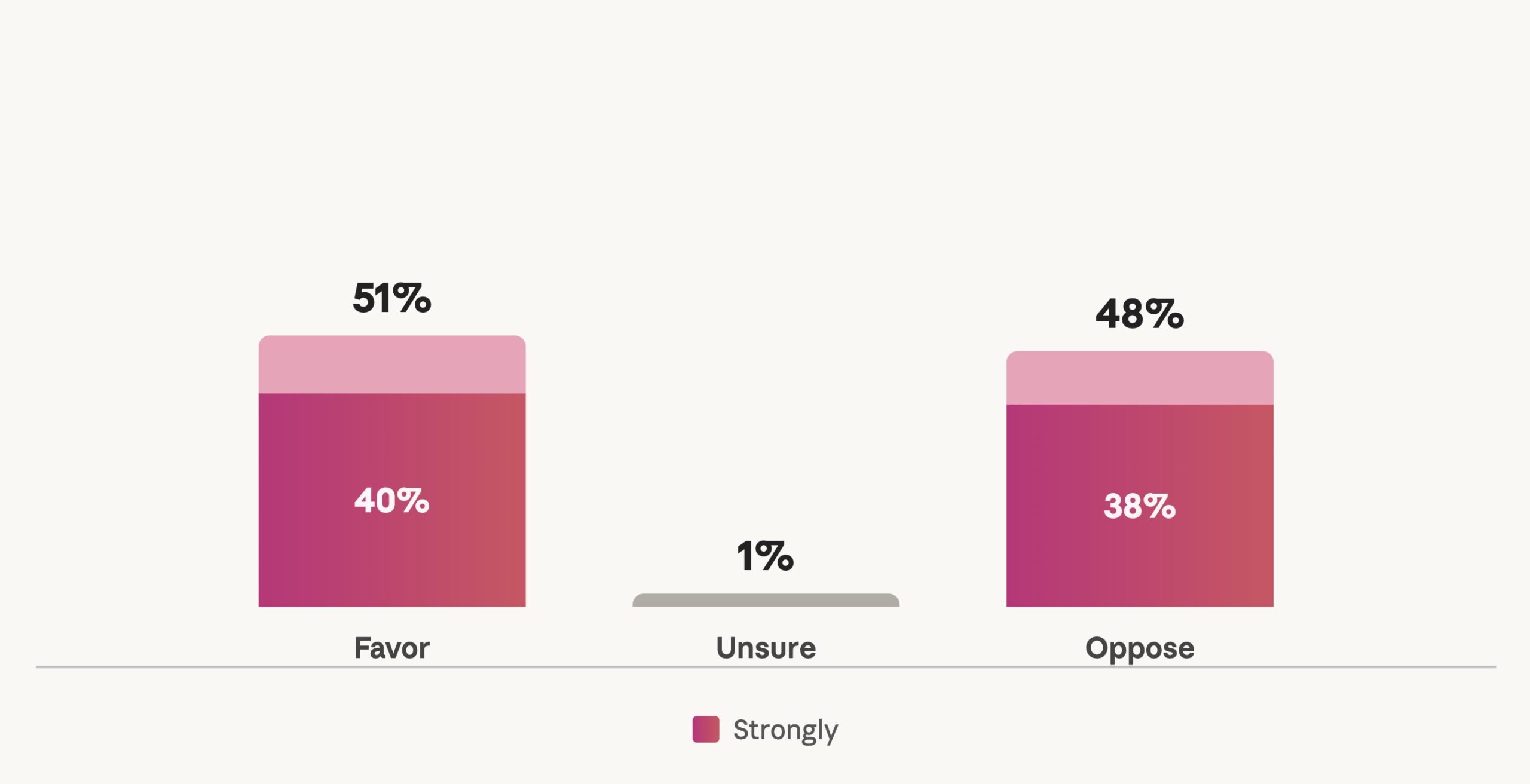
Nevada is one of 14 states that allows mail ballots postmarked by Election Day to be counted a certain number of days late — in its case, by 5 p.m. on the fourth day following Election Day, according to state law. It’s an obscure fact about the election process. But it happens to be central to a Supreme Court case that was argued on Monday.
Watson v. Republican National Committee concerns a dispute between the national party and the State of Mississippi, where the RNC originally filed suit over the law. It lost at the district court level but won on appeal, elevating the case to the nation’s highest court. In Nevada, at least, the electorate is nearly split in half on whether the policy should continue in its state.
Fifty-one percent favor Nevada cutting off the receipt of mail ballots at the close of polls and not counting any that arrive thereafter, according to a Declare/Tarrance Group survey of 600 likely voters there. Forty-eight percent oppose ending the current practice. Interestingly, each side is passionate about their position; four in five respondents feel “strongly” one way or the other. Forty percent total strongly favor ending the late-arriving ballot law, known informally as the “postmark rule” for the relevance of Postal Service postmarks determining whether a ballot was in the mail by Election Day. By contrast, 38 percent in all strongly disapprove.
Still, views of federalism in elections swing overwhelmingly one way
The Declare/Tarrance Group poll did not ask survey-takers about Watson, specifically, but rather the rule at the center of the case. It’s a notable distinction, because 80 percent of respondents agree with the statement, “States should set and run their own elections with federal agencies only having a limited oversight role,” when paired against the contrasting statement, “Federal agencies should be the ultimate decision-makers on election administration, even if a state disagrees with it.”
Federalism as a sort of “north star” for how elections should be run has experienced some cloud cover in recent years. Congressional Democrats pushed a bill called the “For the People Act” during the Biden presidency that would have made several COVID-era ideas about how to expand voting methods during the pandemic permanent across the country. By contrast, congressional Republicans, spurred on by President Trump, have been pushing the SAVE
America Act, which would create new standards for voter ID and proof of citizenship for registration in all 50 states.
Stripped of the power of partisanship, there is a case that 80 percent of Nevada voters siding with a federalist approach to elections would put a majority at odds with continued pushes to substantially increase Washington, D.C.’s role in setting election rules — whether under the banner of “election accessibility” or “election integrity.”
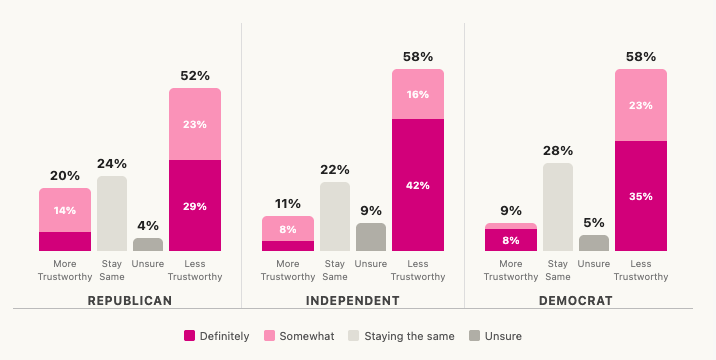 Cygnal · PennsylvaniaTo Pennsylvanians, Nation’s Elections Face Bipartisan Credibility Problem
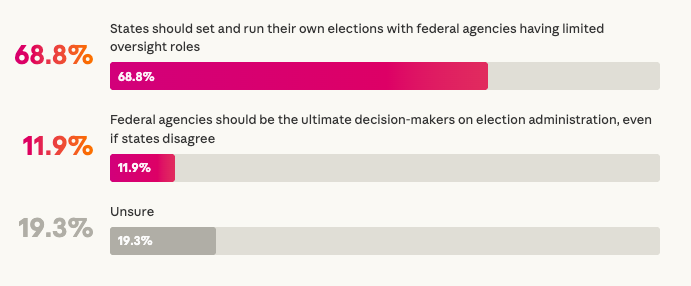 Opinion DiagnosticNC Republicans Favor State to Federal Election Control 63-18
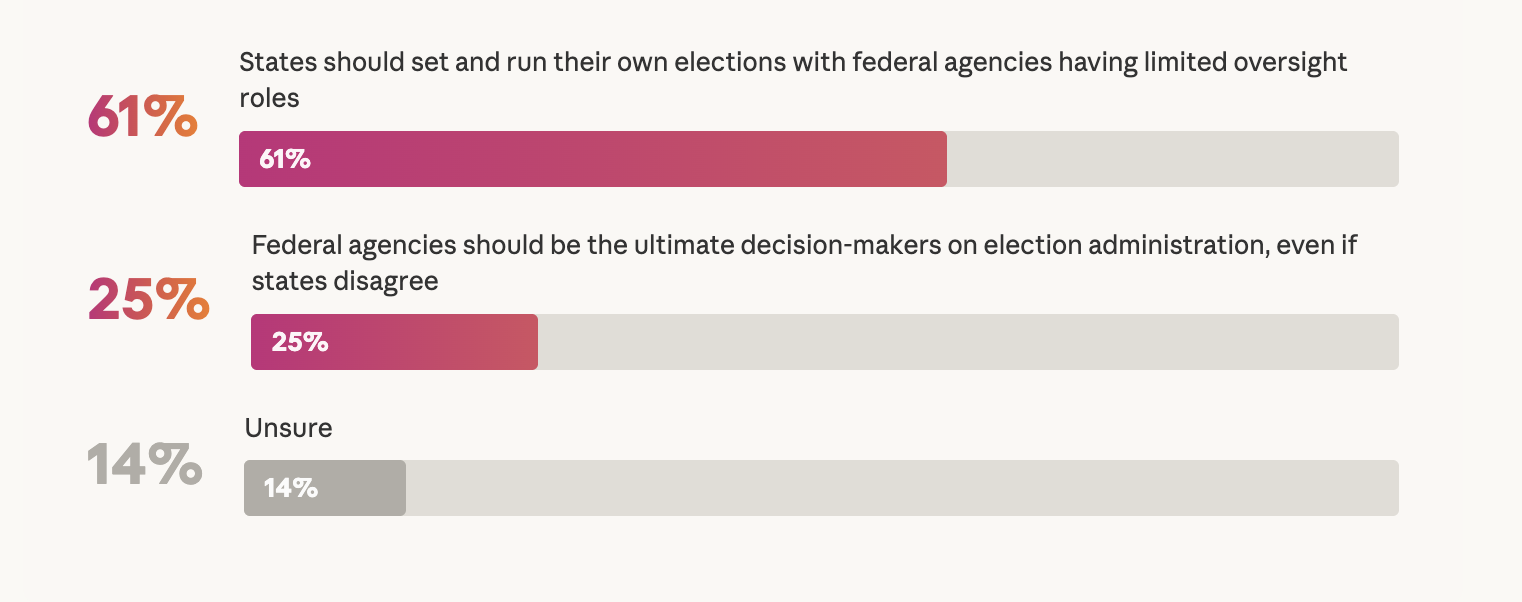 Deeproot AnalyticsState Control of Elections Favored in Giant National Survey
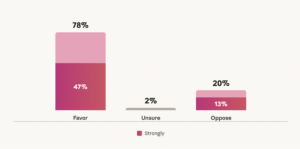 The Tarrance Group · Wisconsin78% of Wisconsinites Back ‘Pre-Processing’ of Mail Ballots
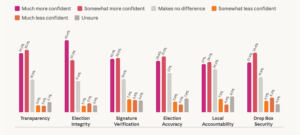 Cygnal · ArizonaKnowing the Process Builds Trust in Arizona, Declare/Cygnal Poll Finds
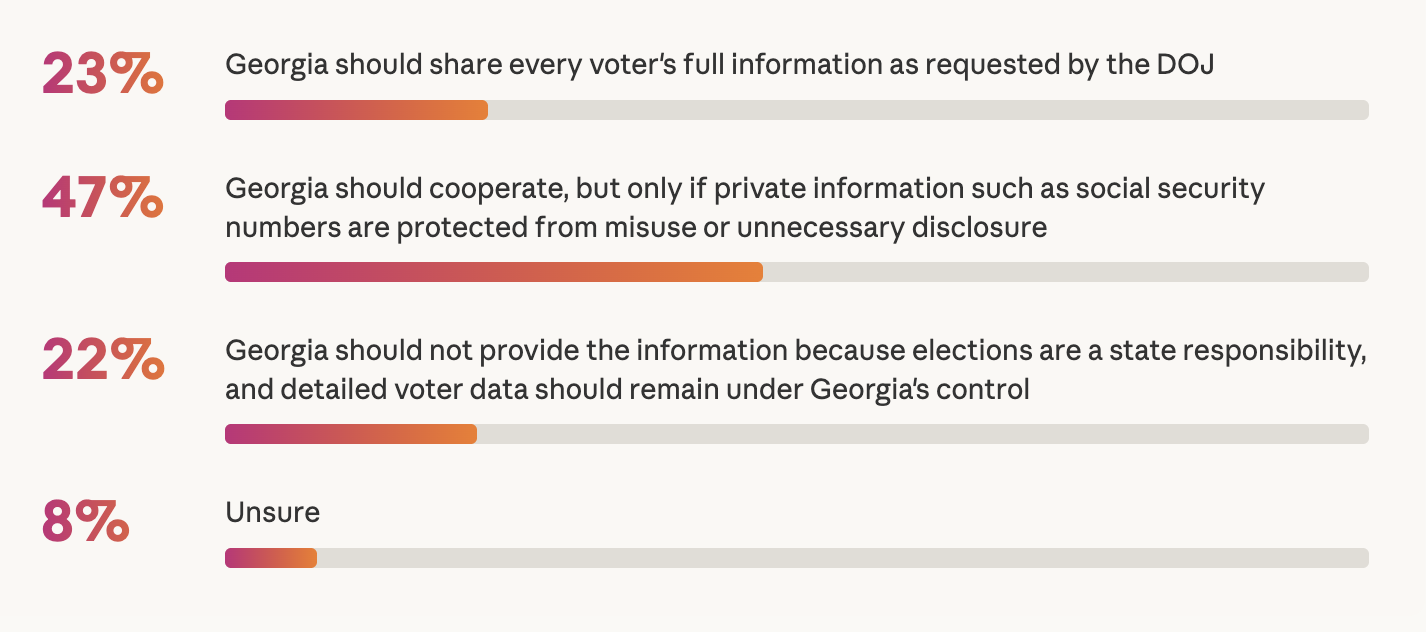 Cygnal · GeorgiaOnly 23 Percent of Republicans Support Full DOJ Voter Roll Request, Georgia Poll Finds