No political term is contested more than “election integrity.” It’s in wide use on the political right: in President Trump’s executive orders, the names and projects of nonprofits, legislative caucuses, state government offices, election laws, and so on. It’s in use among left-of-center sources, too, however: The Brennan Center for Justice is the top Google search result for “election integrity,” and California’s state assembly speaker, Washington state’s attorney general, and Oregon’s secretary of state have all invoked it. More still? How about a bipartisan “National Council on Election Integrity,” the University of Wisconsin’s “Election Integrity Project,” or the Harvard Kennedy School’s “Electoral Integrity Project?” (“Electoral” still counts.)
Among this mere sample of named instances of election integrity — indeed, there are many, many more, among official government entities, advocacy groups, researchers, journalists, and any other body that is part of the political process — there isn’t common language to describe what it actually means. What is the simple definition of it? What are the criteria for it?
This lack, in the context of just how central election integrity is to America’s political discourse and health, prompted us to make an attempt at helping fill the gap.
Throughout 2026, Declare has worked with a variety of pollsters to identify voters’ concerns about the country’s election processes. Republicans and Democrats share some: e.g., the possibility of court cases upending rules just before Election Day, and the threat of cyberattacks. One way to frame where they differ is that Democrats are much more concerned about political events they believe could disrupt accessibility, e.g., “Deployment of troops or federal agents near polling places;” and Republicans are much more concerned about current policy they believe creates measurable vulnerabilities, e.g., voter ID/citizenship verification and mail ballot rules. The latter bucket of concerns is the bigger basis for mistrust of election legitimacy in America, as well as a more quantifiable way to evaluate “election integrity.”
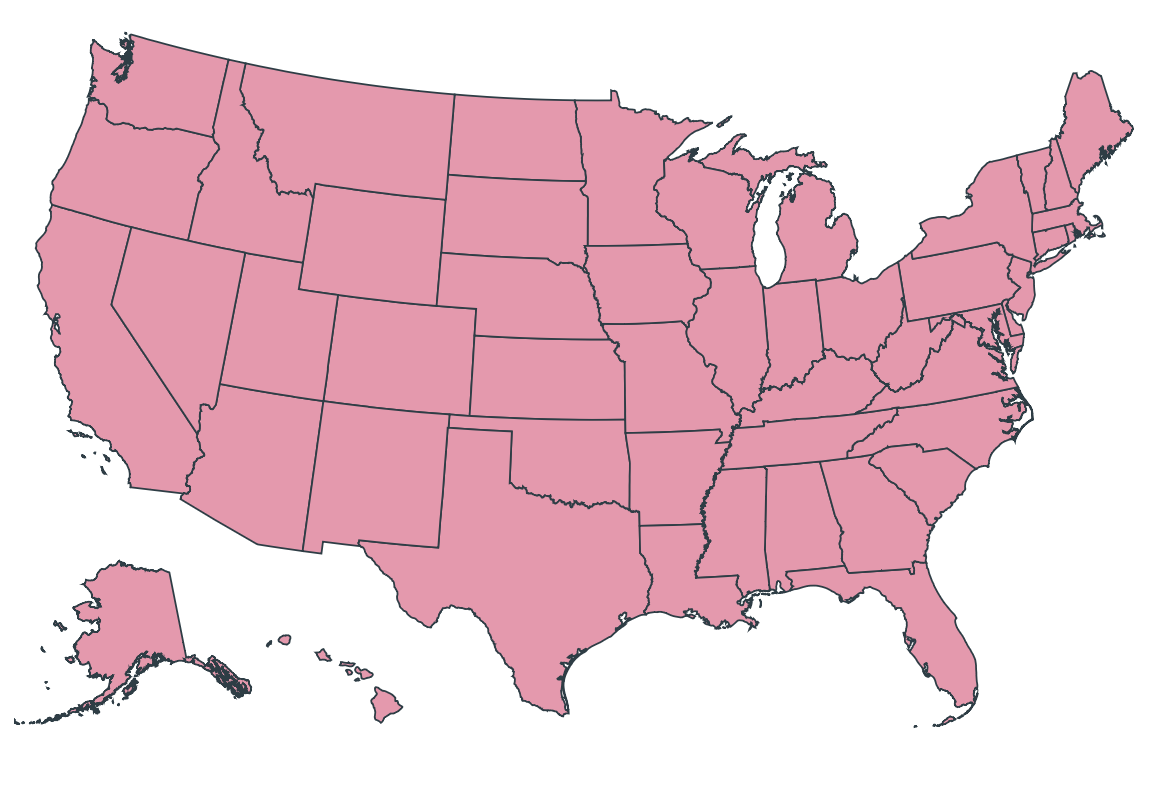
So, that’s what we went with in creating Declare’s Election Integrity Map for the 2026 Midterms, an interactive, 50-state tool that presents four categories of information: post-election processes, mail-ballot deadlines, noncitizen voting, and voter ID laws. Users can see a brief rundown of the relevant procedures, policies, and data for each state by moving the cursor coast to coast, and north to south.
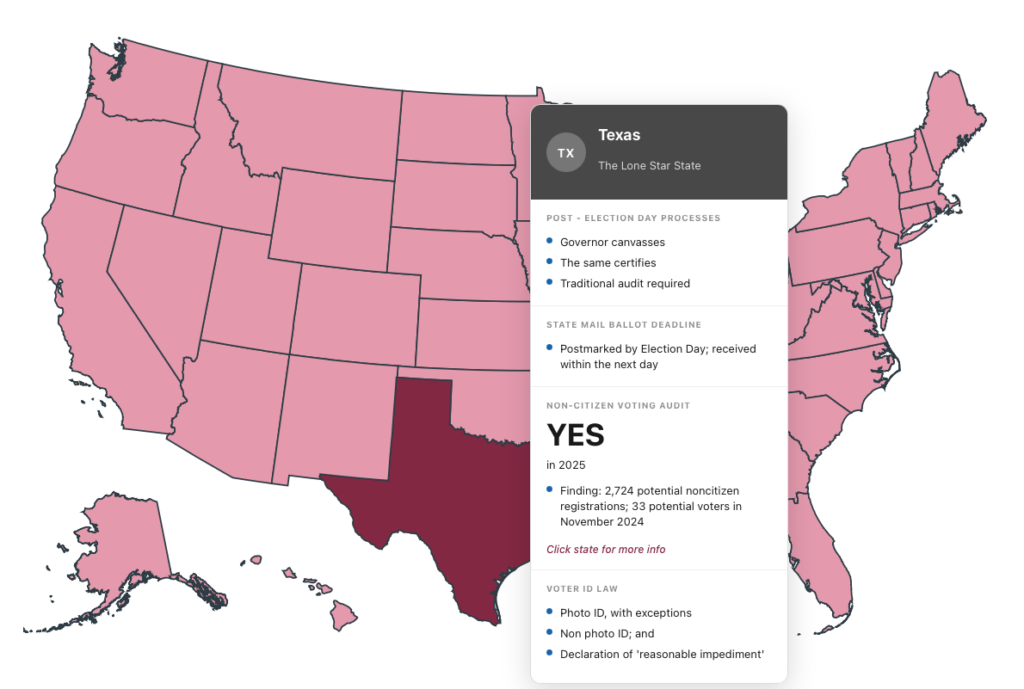
The work is a collaboration among Declare’s editorial and digital teams, and Declare contributor Stephen Richer, who provided all the map’s information about noncitizen voting from research of publicly available information of all the 50 states. If a state’s government has performed and publicly promoted the results of a noncitizen voting audit, its color on the map will turn dark red when hovering the cursor atop it, and be a clickable link to a data page with more information. That page will be reviewed from time to time and updated as appropriate.
Here’s an added comment from Stephen:
“It’s tempting to dismiss claims of noncitizens voting in American elections, because out of the hundreds of millions of ballots cast this century, very few noncitizens have been prosecuted for voting. That’s an important data point, but just because something isn’t prosecuted doesn’t mean it isn’t happening. That’s what makes these affirmative investigations into voter rolls so important. Election officials in these states have used various databases to confirm what we’ve long suspected: There are some noncitizens who are unlawfully registered, but they make up a fraction of a fraction of the voting population. That’s something that should be celebrated, and so too should we celebrate the state officials who conducted these audits. I hope that it becomes a regular practice for those states, and that the audits for noncitizens expand to additional states.”
The map is not a “scorecard,” which rates states by our or another grader’s assessments of their policies. It’s descriptive, not prescriptive.
There’s a thin and increasingly consequential line between presenting information about government and politics, and editorializing about that information. In our nation’s current political culture — one where the people keep trusting each other less, and have less common understanding of the world — an earnest attempt to convey a fact can come off as a ploy to opine. In that spirit, we choose to say here that the data are what they are, and we are confident in the sourcing of them. How they should be interpreted is a personal determination — and the ability of individuals to interpret data responsibly and with reason has always been a pillar of self-government. We can only hope that anyone, including ourselves, who comes across this map does their best to proceed accordingly.
Interact with Declare’s Election Integrity Map for the 2026 Midterms by clicking here.