
President Trump fired two members of the bipartisan, four-person Election Assistance Commission on Thursday night, a technical agency that provides guidance and support to election jurisdictions nationwide. The action followed two relevant developments in federal court, which set the stage for Trump revenging himself on the EAC — but, in the estimation of multiple election experts, likely with little practical effect on the election system, particularly this Midterm year.
First, late last month, a federal district court permanently blocked part of an executive order Trump issued in March 2025 that instructed the EAC to add a citizenship requirement to the “federal form” used for voter registration in all 50 states, and to withhold federal money to election jurisdictions that failed to adopt it. The EAC had not followed through on Trump’s order before then. Second, also late last month, the Supreme Court ruled that presidents have greater authority over independent government agencies than was previously held, in a case that tested the constitutionality of Trump’s firing of two Federal Trade Commission members without cause.
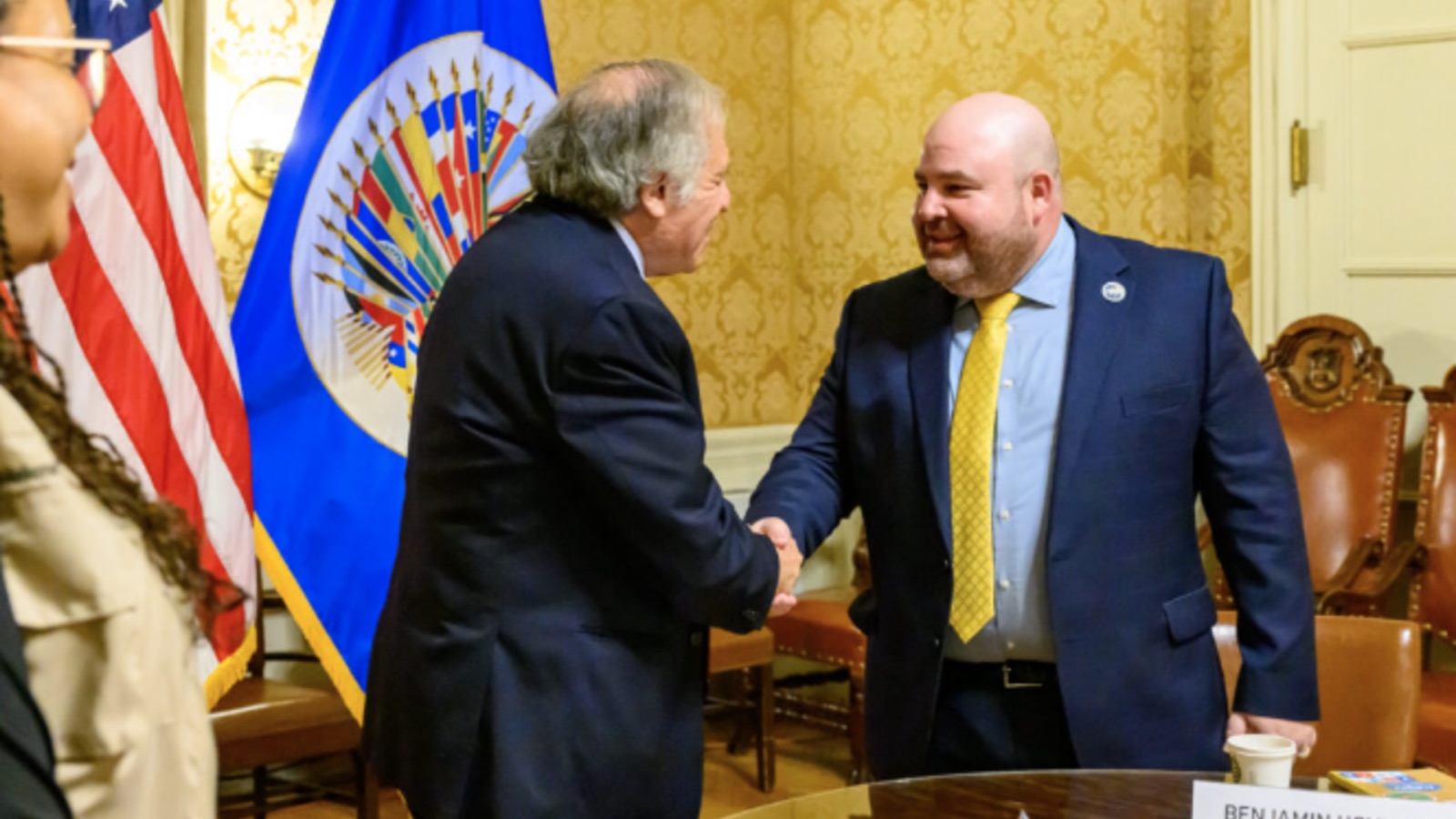
So, in its comment on the removal of Commissioners Thomas Hicks and Benjamin Hovland (the EAC’s two Democrats), a White House official said: “The President, and head of the Executive Branch, reserves the right to remove individuals that may not be totally aligned with the important task of securing America’s elections and ensuring every legal vote is counted. The Slaughter [FTC] decision gives the President precedence to do so.” The commission is now vacant, after the only other active member, Republican Christy McCormick, resigned amid the firings of her colleagues, according to widespread news reports.
Trump’s action elicited alarm and warnings from several congressional Democrats, including Mark Warner, the ranking member of the Senate intelligence committee. It “should concern every American, regardless of party, because the EAC was established by Congress as an independent, bipartisan body to help states administer secure and credible elections,” he said in a statement issued immediately after the news was made public.
However, it was not established as a powerful authority with direct control of the election process. The EAC was created by a 2002 law, the fittingly named Help America Vote Act, as “an independent, bipartisan commission charged with developing guidance to meet HAVA requirements, adopting voluntary voting system guidelines [VVSG], and serving as a national clearinghouse of information on election administration.” It also accredits testing laboratories and certifies voting systems, and audits the use of federal funds made available under HAVA.
And inasmuch as the commission has a role in this year’s Midterms — it’s already been performed.
“The VVSG is set. Two independent federal labs certify systems,” Gabriel Sterling, who has served as the chief operating officer for the Georgia Secretary of State, told Declare. “But going into the election, no jurisdiction will be changing what they already have on the ground.”
David Becker, the Executive Director and Founder of the Center for Election Innovation & Research, elaborated in a social media thread posted on Friday morning. “It has limited power, overseeing federal certification of voting machines (which is voluntary), and administering federal election grant money, which has been sparse,” he said of the EAC.
“I’ve talked to dozens of election officials of both parties all over the country since the EAC dismissals, and not one is concerned.”
Stephen Richer, a Declare Contributor and former chief election official of one of America’s most populous counties, Maricopa County, Ariz., concurred:
This will have next to no impact on the administration of the November midterm elections, absent some very strange subsequent development. I’m surprised that the President hadn’t previously turned his eye to the EAC, given his interest in election administration, and given that all four commissioners were serving on expired terms. Still, there’s an appropriate way to relieve people of their roles, and to thank them for their years of service to the federal government, and I’m not sure this was done in that way. I wish the departing commissioners the best as they undoubtedly scramble to figure out their new lives.
As it was yesterday, is today, and will be on Election Day in November, federal elections are administered at the local and state level. The emptying of the EAC comes amid a string of recent federal court decisions forbidding the implementation of Trump’s two executive orders on elections issued so far during his second term.