

Poll analysis · Declare / Cygnal · Georgia
Only 23 Percent of Republicans Support Full DOJ Voter Roll Request, Georgia Poll Finds
A plurality backs a compromise solution that includes partial data, according to the Declare/Cygnal survey.
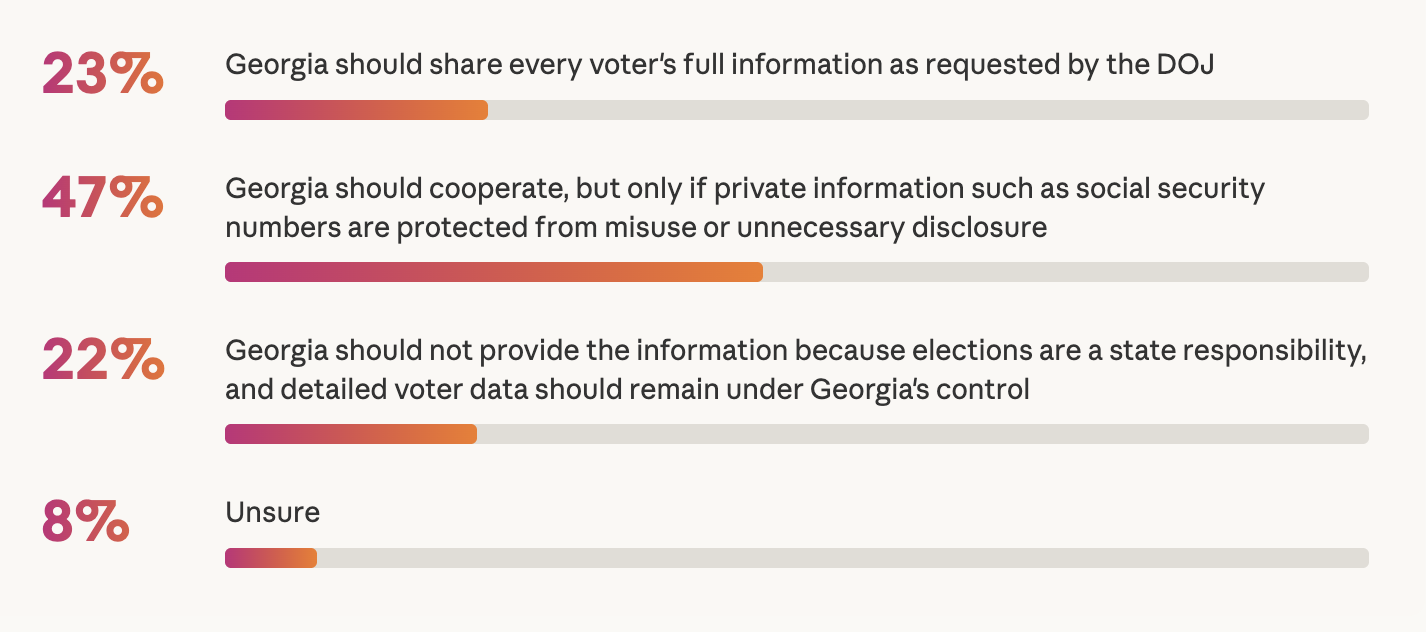
As the Department of Justice continues to sue states — including four red ones last week — for not providing voter roll data to the federal government, a significant majority of Republican likely voters in Georgia isn’t fully on board with the idea.
Only 23 percent of them say that the state “should share every voter’s full information as requested by the DOJ,” according to a Declare/Cygnal survey completed last month. Forty-seven percent say that Georgia should cooperate only if private information “such as social security numbers are protected from misuse or unnecessary disclosure.” Another 22 percent oppose the idea altogether because “elections are a state responsibility.”
“The baseline is mistrust. The starting point, even for Republicans, is to say, ‘Hold on, what do you need this for?’” Cygnal pollster Alex Tarascio told Declare. “And so that’s why I was not surprised to see the results shake out the way they did.”
The Justice department has taken several states to court after they offered the sort of compromise that the plurality of Georgia Republican voters say they back. Georgia secretary of state Brad Raffensperger sent the DOJ a voter list in December that redacted “sensitive information that implicates special privacy concerns,” in consultation with the state’s attorney general. The department acknowledged as much in a suit it filed against the state later that month; it was dismissed in January on grounds that the specific U.S. district court lacked jurisdiction. The DOJ refiled in a different venue in February.
As additional examples, the red states of Kentucky, Utah, Oklahoma, and West Virginia were sued just last week, after they provided either a copy of their publicly available list (in the first two states’ case) or instructions for how to obtain it (in the case of the latter two).
“A Social Security number, driver’s license number and date of birth together represent the ‘Holy Grail’ for scammers,” Raffensperger wrote in an op-ed for the Atlanta Journal-Constitution in January. “Intentionally releasing that data would put millions of hardworking Georgians at risk of identity theft, financial loss, and years of personal hardship, all for a political stunt they, voters of our great state, never asked to be part of,” referring to a resolution introduced in the Georgia senate to urge his compliance with the federal government.
The DOJ has made these requests of nearly every state, arguing that it needs the data to check for ineligible registered voters. It also has told states that it may share the voter information with “a contractor with the Department of Justice who needs access to the [voter registration list]/Data information in order to perform duties related to the Department’s list maintenance verification procedures,” which is central to critics’ data privacy concerns.
The National Voter Registration Act of 1993 lists requirements of states to maintain their own voter rolls.
Election skepticism down
In contrast with findings from Arizona in a separate Declare/Cygnal poll, many fewer Georgia Republicans doubt the validity of election results now than of those from 2020. Sixty-six percent of Republican respondents say that the election that year suffered from “widespread process errors or fraud that altered results.” Only 16 percent say as much of the 2024 election — and 26 percent expect it to be true of the 2026 Midterms.
Notably, that’s about the same as Independents (27 percent) and Democrats (23 percent).
Georgia has been the target of sensational political rhetoric and extreme actions dating back to 2020. It was after that election that President Trump pressured Raffensperger by saying that “I just want to find 11,780 votes” to flip Georgia’s electoral votes from then-President-elect Biden to him. The next year, Gov. Brian Kemp signed an election reform bill into law, SB 202, that Biden called “Jim Crow in the 21st century.” Under political pressure, some prominent entities in the business community denounced the measure, including Major League Baseball and its relocation of that year’s All-Star Game from Atlanta. Polling from the University of Georgia utterly refuted any comparison between the Georgia law and 20th-century segregation. Recently, the FBI conducted a truly unprecedented raid of a Fulton County election office, to seize election materials from the 2020 vote as part of a continued effort to discover widespread fraud that no previous investigation has demonstrated in the slightest.
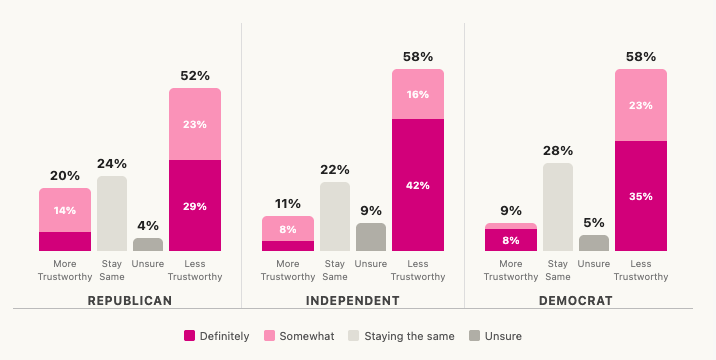 Cygnal · PennsylvaniaTo Pennsylvanians, Nation’s Elections Face Bipartisan Credibility Problem
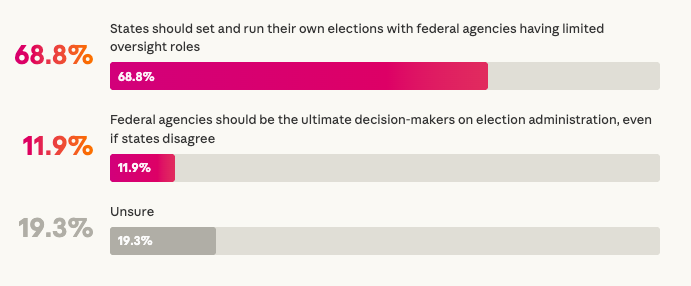 Opinion DiagnosticNC Republicans Favor State to Federal Election Control 63-18
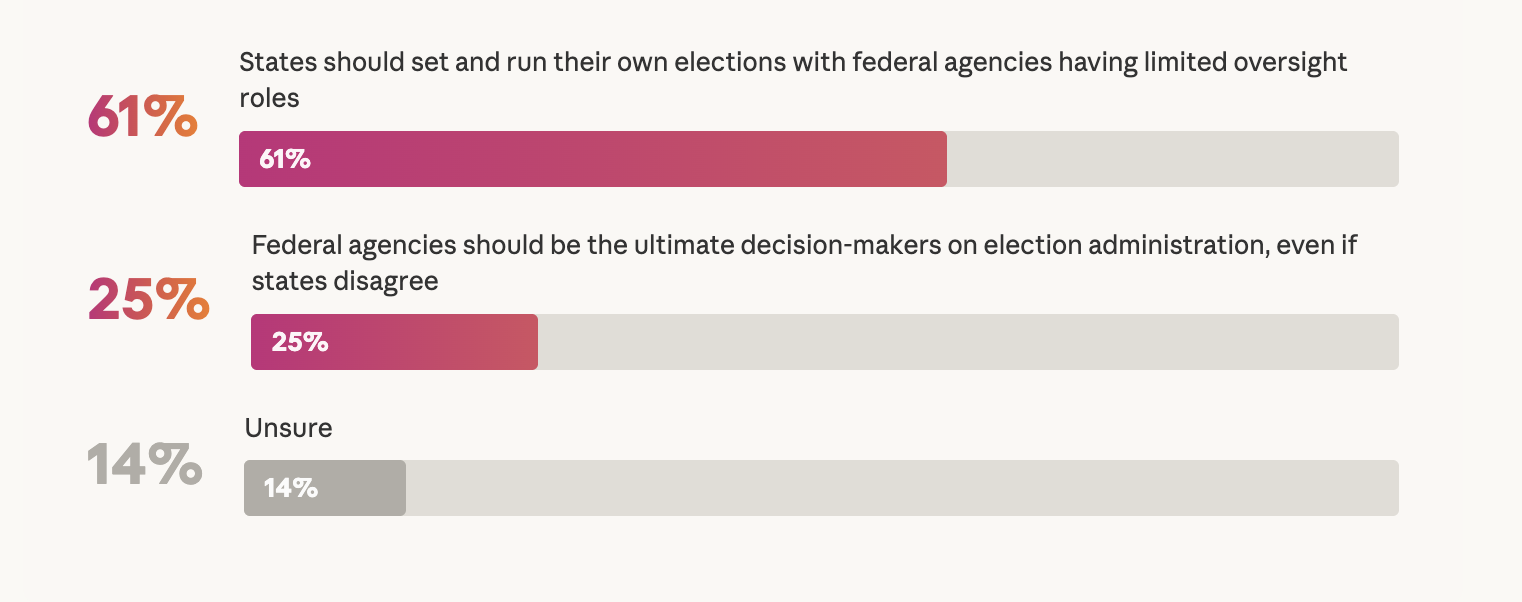 Deeproot AnalyticsState Control of Elections Favored in Giant National Survey
 The Tarrance Group · NevadaNevada Voters 50/50 on Supreme Court Issue Argued This Week
 The Tarrance Group · Wisconsin78% of Wisconsinites Back ‘Pre-Processing’ of Mail Ballots
 Cygnal · ArizonaKnowing the Process Builds Trust in Arizona, Declare/Cygnal Poll Finds