

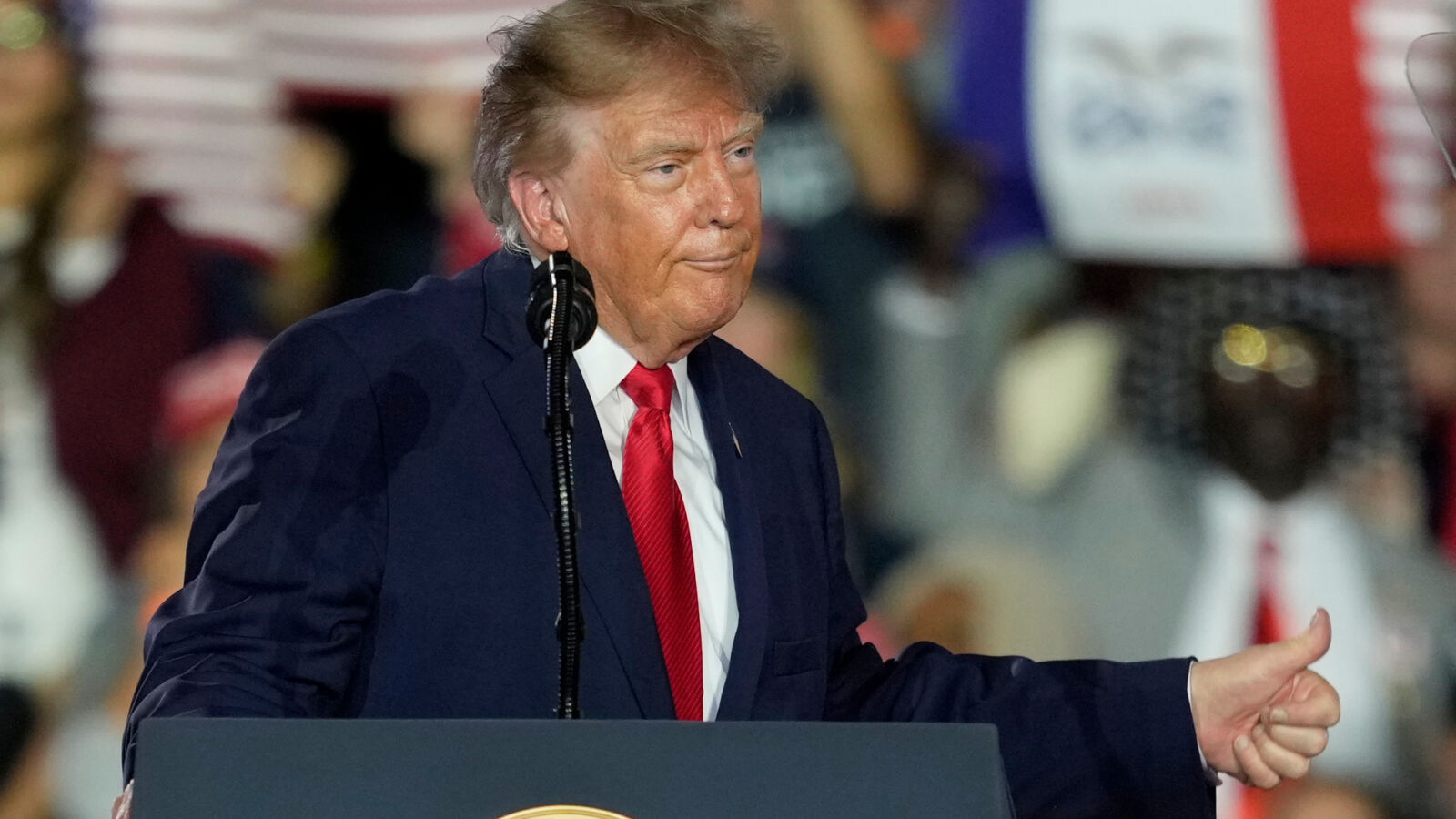
Late Tuesday night, as it appeared that congressional Republicans were headed for the largest Midterm rebuke since the Tea Party wave of 2010, President Donald Trump said that he is “absolutely willing” to accept the results and is looking forward to working with the new congressional majorities.
“We’ll work with the Democrats, and we’ll, you know, look forward to working with them. We’ll probably work something out,” he told the New York Times in a brief interview.
The Times relayed an aside of its reporters’ conversation with the president in which he awed at the loss of South Carolina Republican Darlene Graham, the sister of the late Sen. Lindsey Graham, who was running to succeed him for a full term. The reflection came off as a politician embracing reality — 180 degrees opposite of his previous warnings that Democrats would cheat to win this year without federal intervention in the election process, and of his insistence that he won the 2020 presidential election.
Widespread Democratic victories in toss-up seats and competitive elections in unlikely places — Florida, Mississippi, even Louisiana, where the Senate races were trending toward margins of 3 percentage points or fewer — left no room or time to develop theories about ways the pivotal results were illegitimate. As of this writing, the Ohio, South Carolina, and Texas Senate races had been called for the Democrats, and the Iowa and Kansas races weren’t far off. A Senate majority of the mid 50s and a House majority of 250 or more seats was likely at the end of Tuesday.
Trump’s comments effectively preempted the political force of any efforts in the coming weeks to cast doubt on the outcome. As it has been in recent elections, all states will undertake canvassing and certification processes during that time, when they audit votes and processes to catch errors. Some, as usual, likely will be found; and also as usual, likely will have no effect on the winners and losers for the biggest offices. In Georgia, incumbent Democrat Sen. Jon Ossoff was headed for a victory larger than 15 points; in Texas, a 10-point spread or more for Senate candidate James Talarico; and in Iowa, Kansas, Michigan, Ohio, and South Carolina, the Democratic Senate candidate was poised for wins between 3 and 5 points.
These results reflected those of the House races, where the narrowest contests would either pad or shrink a majority of several dozen seats.
Election Day itself ended up being uneventful across the country, with no major instances of irregularities that lacked explanation and satisfactory resolution. There had been fears that the president would direct law enforcement to intervene at polling places, but the headlines never rose above a few reports of Justice Department election monitors asking questions of poll workers and voters in a handful of states, ultimately without incident. The Trump administration had made several last-ditch attempts to challenge some mail voting states’ voter rolls, but they were turned away by the courts at each step, including by the Supreme Court in the case of California.
DOJ’s Incompetence Should Concern Everyone, Republicans Included