
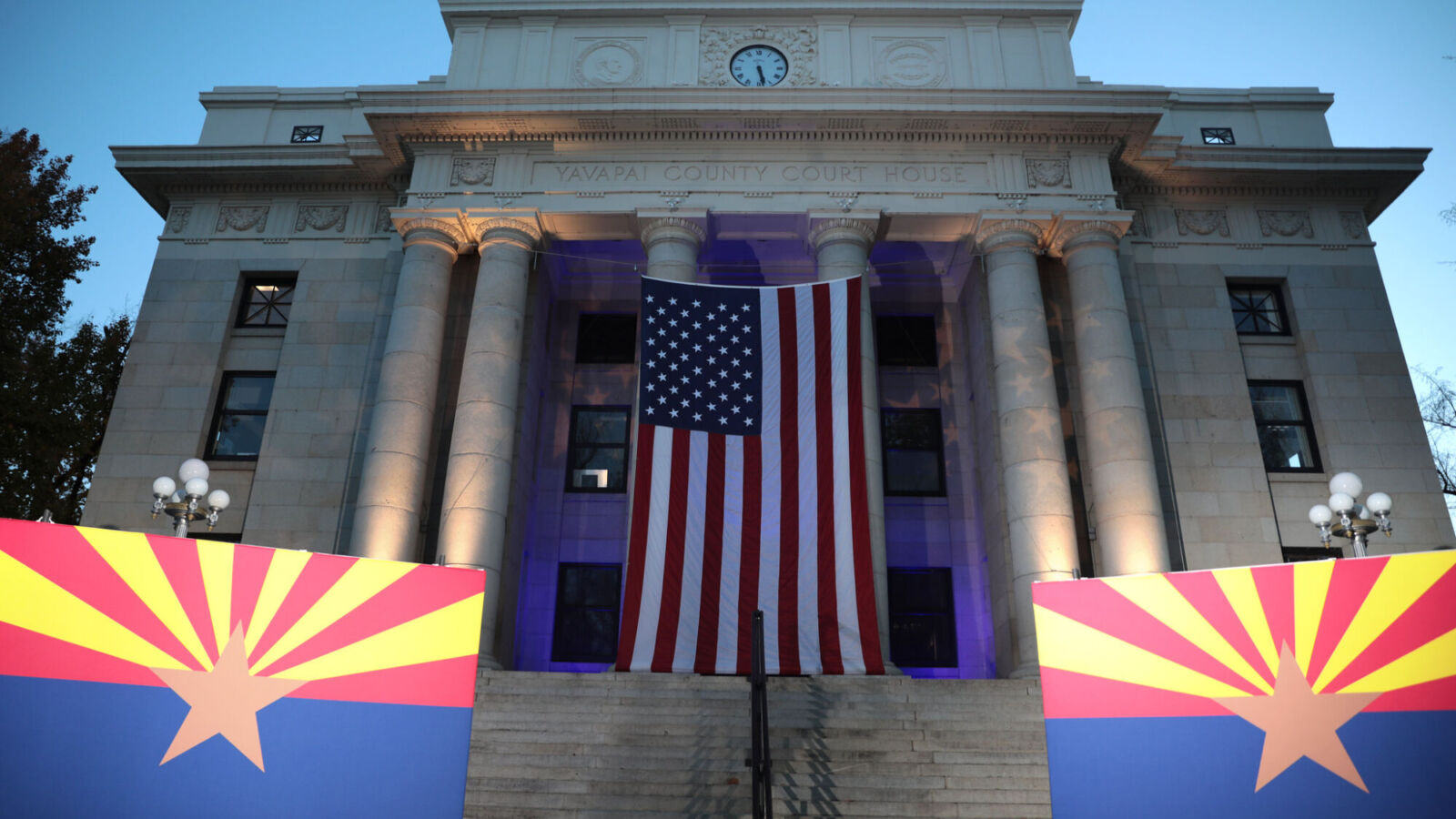
Last Friday, Yavapai County, Arizona, published the results of its thorough audit of its approximately 195,000 registered voters. It used both state and local resources, and the county’s chief election official (Michelle Burchill) even called some individual registrants to confirm their status. The county broadly reached the same conclusions as other states’ recent audits have:
- Whether by accident or with unlawful intent, some noncitizens are registered to vote, and a fraction of that number votes. Yavapai County confirmed 30 registered noncitizens, four of whom voted in a past election.
- While it happens, noncitizen registrations constitute a tiny fraction of the total voter population. In Yavapai County’s case, it’s about .015 percent.
- If used properly, the federal government’s SAVE program can be a useful tool for list maintenance.
None of this will surprise any regular readers of Declare or followers of my posts.
Still, it’s worth reading the actual report published by Yavapai County, as it’s one of the most thorough descriptions of a responsible audit process (Utah’s, Florida’s, and Pennsylvania’s are also excellent), and it contains some less well-known insights:
- The federal government’s SAVE program can also assist with identifying deceased registrants. If a voter dies in another state, the status-quo means for conveying that information to the deceased’s home state is less-than-perfect. The SAVE program seemingly fills some gaps.
- The federal government’s SAVE program can also be used to expand access. Some registrants in Yavapai County couldn’t yet vote a full ballot because they had not provided proof of citizenship. The SAVE program provided proof of citizenship to Yavapai County for 316 registrants. They are now “full” voters. (See footnote.)
- There are very real frustrations to list maintenance efforts. Perhaps the biggest one is that government data about registrants lives in many different government departments at both the state and federal level, and the tools for obtaining this data are far from complete. It’s important to remember that there is no federal voter registration database, and there is no legal requirement for states to share voter information with each other.
All in all, the audit report is an impressive document that is likely to help bolster confidence in Yavapai County’s elections. Well done to Recorder Michelle Burchill and team. We’ll be adding the audit to Declare’s state-by-state tracker.
Note: In Arizona, voter applicants are required to provide proof of citizenship for eligibility to vote in state and local elections. If they don’t and are otherwise eligible, they’re registered as “Federal Only” voters. The difference stems from a 2013 Supreme Court case that disallowed the state from using a proof-of-citizenship standard for voting in federal elections.