
This story was updated on August 27, September 1, and September 8 to account for legal developments that occurred after original publication.
News developments about a major provision of President Trump’s March executive order on elections occurred on back-to-back business days in late August, first from the Postal Service and then the Supreme Court. Several advocates of the order who have large social media followings originally claimed these developments as victory, while much mainstream news coverage presented a muddied image of reality.
With just two months until Election Day, legal activity has proceeded in a flurry through early September, restoring something close to the status quo that existed when this story was originally published — with the catch that courts were first responding to an executive order whose provisions hadn’t yet been implemented, and now are addressing the actual text of a rule from the Postal Service which stems from that order.
Technical? Confusing? Yes. Here’s our best attempt at a running brief to get readers up to speed:
The timeline of the initial story
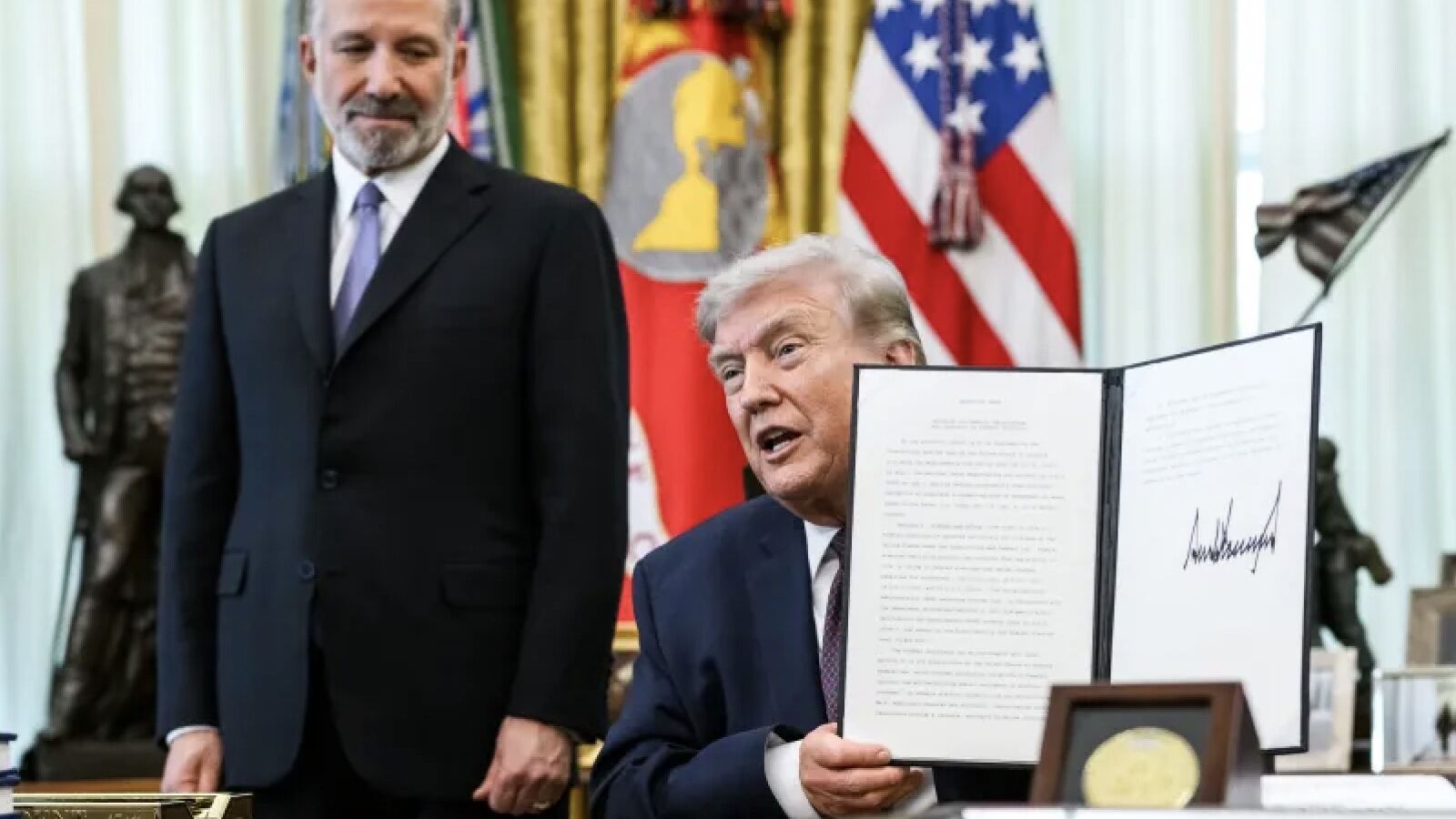
In March, Trump issued an EO (“Ensuring Citizenship Verification and Integrity in Federal Elections”) which directed the appropriate federal agencies to compile and transmit lists of citizens and eligible mail voters to the chief election officials of each state. These “State Citizenship Lists” and “Mail-In and Absentee Participation Lists” (together, “the Lists”) would create for the federal government a new, extensive role in election oversight that has always fallen to the individual states, with certain visible implications — i.e., Section 5 of the rule, “Enforcement” — and hidden ones, such as new procedures for local and state election administrators. (See Declare’s conversation with contributor Stephen Richer for more here.)
In June, a federal district court ruled that the sections of the executive order instructing the creation of the Lists were legally void, “as they are ultra vires (“beyond the powers”) and unconstitutionally violate the separation of powers.” This case has been just one among many challenging the “Ensuring Citizenship . . .” order (see, for example: “President Trump’s Election Orders Are Failing in Court. Why?”), but also the most legally prominent one on the mail ballot-specific issue. An important point for this timeline: At the moment of this district court’s decision, the Postal Service hadn’t published a final rule implementing its part of the Trump order.
On Friday, August 21, the USPS issued that final rule. Although mail ballots for the November general election are starting to be sent in a handful of states as of the latest update to this story, “[D]espite any logistical or financial difficulties states may face complying with the rule,” the Postal Service stated, “including some claims that immediate implementation would prove impossible, the visibility and law-enforcement benefits of the rule, including for this election cycle, are such that there is no compelling reason for any delay.”
On Monday, August 24, the Supreme Court weighed in on the Massachusetts court’s decision, on a purely procedural count: whether the states that sued (and originally won against) the Trump administration had standing to do so, which concerned the federal government’s argument then and its appeal to the high court. A 6-3 majority sided with the administration: “The Executive Order makes no demand of the States,” the ruling reads, as the order itself comprises “internal directive[s] from the President to … subordinate[s],” i.e., the Postal Service, the Department of Homeland Security, etc. Recall at the time of the June decision that the Postal Service hadn’t published a final rule.
“The Court’s disposition of this application does not mean that any measure taken by the Government to implement the Order will necessarily be lawful. On that score, time will tell,” the Supreme Court’s granting of the Trump administration’s appeal states, making the distinction. “But the Order itself does not harm the States.”
The reality
From the president’s camp, one representative reaction to the Supreme Court’s decision was: “BREAKING: The Supreme Court just issued a ruling ALLOWING Trump’s EO to restrict mail-in ballots in 23 states and D.C.” CNN more or less agreed in its headline, which reads, “Supreme Court backs Trump’s order to curb mail ballots.” The Associated Press wrote on X: “BREAKING: The Supreme Court has cleared the way for President Trump’s executive order restricting mail-in voting ahead of midterms.”
Georgia election official Gabriel Sterling issued a corrective:
Some, unfortunately even the AP, are misreporting what SCOTUS did. They essentially said that states do not have standing to stop an executive from directing an executive agency from doing something. However, they can sue to stop a final rule that impacts them. The rules in question were finalized Friday. They can, and likely will today, sue to enjoin them and would likely succeed.
Legal scholar and election law expert Rick Haden was even more specific about his process expectations: “I expect that the [Massachusetts] court will . . . issue a new injunction that will stop USPS from implementing its now final rule. And that too may end up at the Supreme Court within a week.”
And Declare contributor Ben Ginsberg appeared on CNN, having this to say in response to a question about his view of what’s next:
Well, the rule becomes final on Wednesday, so my guess is there’ll be the challenges filed on Wednesday. There’s also the practical applications that are going to have to be dealt with at some point. What the executive order tries to do to the United States Postal Service, and certain envelopes and lists prepared by USPS and the Department of Homeland Security — none of those lists have been made public, so the practical implications are huge. Plus, you have to remember the problems and really distress this causes to election officials, who have a lot of work to do to get their elections ready to go soon, and there is all this uncertainty about it, which takes away a little bit from the blocking and tackling that they have to do to put on an election. And that may be the most worrisome part, in terms of the overall chaos around elections.
Subsequent legal activity
Indeed, 24 states and the District of Columbia filed a new complaint in the same Massachusetts court on August 26, assessing and challenging the specific language of the finalized rule. “The Rule violates the Constitution and federal statutes many times over,” it reads, before specifying a long list: “It displaces state laws adopted pursuant to each State’s constitutional authority to administer elections, erects new USPS functions and ballot mail constraints that are inconsistent with USPS’s governing statutes, flouts USPS’s procedural requirements, violates the Privacy Act, and cannot be reconciled with federal voting rights law.
“Each of these defects would alone establish the Rule’s unlawfulness. Together, they demonstrate USPS’s utter disregard for the law in carrying out the President’s policy preferences.”
That suit is parallel to another, led by the League of Women Voters of Massachusetts. On the 27th of last month, the Massachusetts court granted a temporary order addressing each, issuing a 14-day stoppage to the Postal Service from implementing the final rule. “Based on the record presently before the court, Plaintiff States face irreparable harm where they are required to comply with a likely unconstitutional regulation for which compliance is practically impossible as to the 2026 midterm elections, now little more than two months away,” the order reads.
A week later, within that 14-day window, the district court replaced its temporary order with a broader pause to the most important aspects of the Postal Service rule (a preliminary injunction). As expected, the Trump administration appealed to the Supreme Court again a couple of days later, on September 6.
In effect, the legal process is now “back where it started” a few weeks ago: the Supreme Court is weighing a request for appeal to a lower court’s injunction against the implementation of an action from the Trump administration. Then, it was an executive order from the Trump administration, at a time the relevant agency (the USPS) hadn’t finalized language to implement its portion, leading the Supreme Court to determine that courts weighing in was premature. Now, the USPS has a finalized rule for the courts to react to; the Massachusetts court remains in opposition on the merits, and the high court is being asked to intervene.