

RAPID CITY, S.D. — Since the COVID pandemic and Joe Biden’s inauguration as president in 2021, politicians and activists have jostled over the federal government’s role in election policy relative to the states’. Democrats made what could be called a “voter-accessibilty” bill, the For the People Act, the first piece of their congressional agenda after Biden’s victory. Republicans have followed with “election-integrity” legislation during the second Trump administration, particularly the SAVE America Act. President Trump has tried going his own way with executive orders.
It’s not a contest that state-level officials — of either political party — have necessarily welcomed.
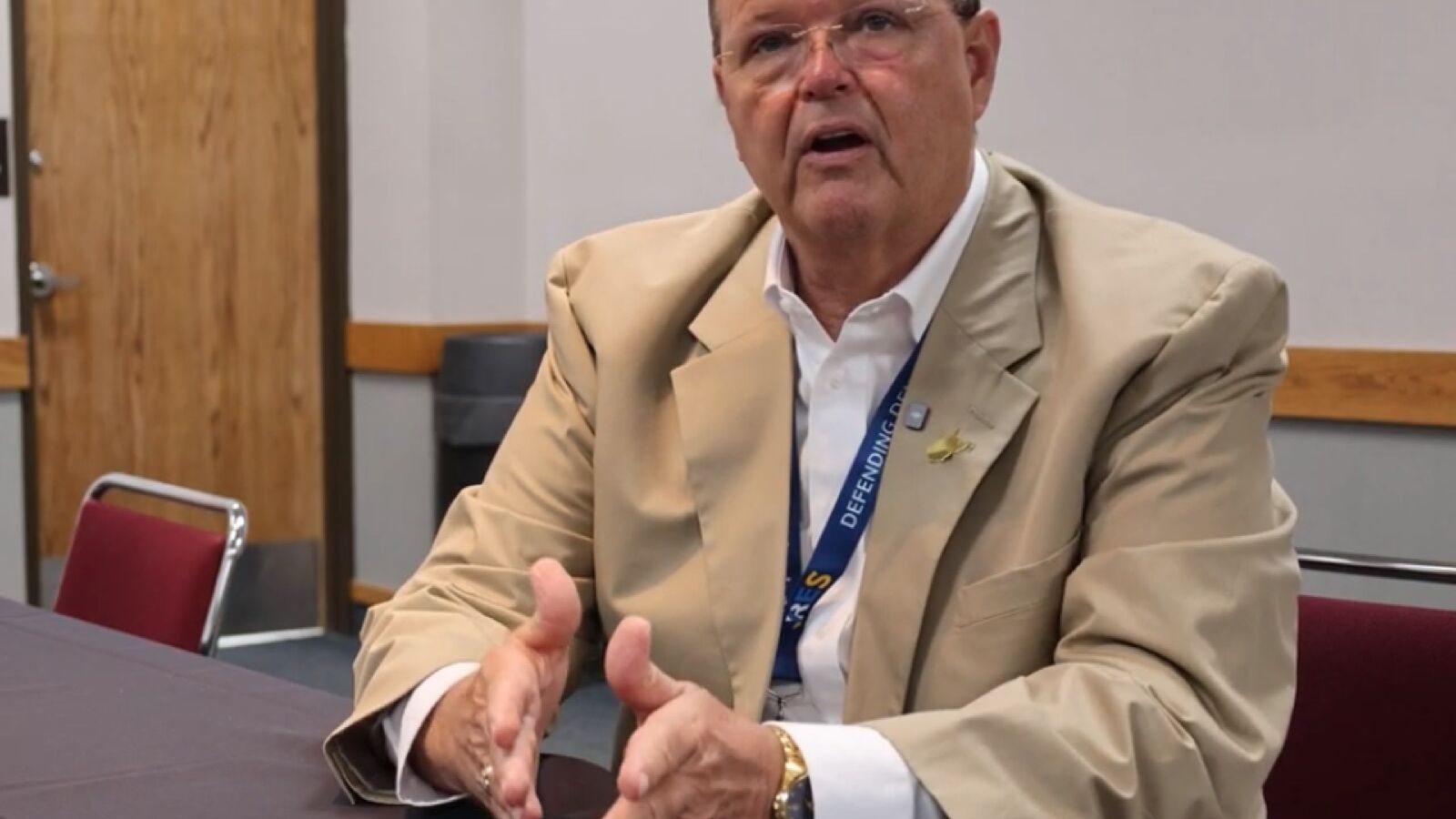
“Quite frankly, we’re best off when the federal government stays out of our elections. If they want to stay out of West Virginia, that would be perfectly fine with us,” quipped Kris Warner, the chief election official of the Mountaineer State, to Declare last week at a conference for America’s secretaries of state.
But Warner and some of his peers took the federal-versus-state conversation one level lower at their twice-yearly gathering, three-and-a-half months from November’s Midterm elections. Regardless if the federal government creates certain standards for all 50 states — or if state assemblies pass this or that election measure — it’s localities that operate the election process.
“Locally administered elections with some level of federal standards is a fine thing. But it’s also a relationship between the states and the counties. I love serving as Ohio’s chief elections officer, but I don’t personally run elections. It’s done by tens of thousands of really dedicated people throughout our state,” Secretary of State Frank LaRose told Declare.
At a time when public trust in elections is flagging, these officials provided reasons why local control — “a feature, not a glitch” of the system, LaRose said — should provide voters with confidence, or at least the opportunities to build it.
One reason is familiarity. “I would tell you it takes 85-hundred poll workers in over 16-hundred precincts to run an election [in West Virginia], but those are friendly faces that you’re gonna know when you walk into the polling place,” Warner said. That literal scenario is more likely in a sparsely populated area than a dense one, granted — but no matter what, they’re neighbors, in their capacity as members of a community, who oversee the vote at election sites.
“You’re walking into a polling place, you’re seeing familiar faces. These are not federal agents. The federal government is not running our election,” Warner stressed.
Coincidentally or not, polling consistently finds that Americans trust elections run in their own jurisdictions more than those conducted elsewhere; the MIT Election Data + Science Lab asks such questions, for example. But that raises a second reason to view local authority as a part of trustworthiness, and it’s a bit of a thought exercise. If lots of people in Community A trust their own elections, but not those in Communities B and C; yet lots of people in Community B trust their own elections, but not those in Communities A and C; and the same goes for Community C, with respect to Communities A and B — then maybe all the different communities’ residents should consider believing what the others are saying.
“For the same reasons they trust the elections in their backyard, they should trust the elections in my backyard,” is how Connecticut’s secretary of state Stephanie Thomas put it. “I have friends and neighbors who are election administrators, who across every town in Connecticut are running the elections. There is no bogeyman in the corner. It’s people you know, from the PTA to the Lions Club … who are powering elections across this country.”
That kind of line doesn’t always land. In Arizona, for example — a state with particularly high skepticism of election legitimacy — just 43 percent of likely 2026 Midterm voters said they trusted local election administrators “to do the right thing,” compared to 39 percent who distrusted them, according to a poll from Cygnal conducted in January. The responses split largely along partisan lines. And among six messages that respondents were asked to rate in terms of how they affected their confidence in the process, the one that resonated least was about local accountability.
But a third reason why the local election role still could benefit trust is because of what it affords: the chance for people to drive down the street and see for themselves. “Here’s the challenge I would give to election integrity enthusiasts out there: Sign up to be a poll worker,” LaRose said. “Your county, your parish, they’re probably looking for election officials right now. Look them up, call them; it’s a long day, a little bit of training, a long day that you put in. After that, I think you’ll know why we can say with a straight face, very confidently, why we make it easy to vote and hard to cheat.”
The secretaries’ meeting took place the same week that President Trump delivered a speech about intelligence and research findings pertaining to the 2020 election, which he used partly to reiterate his call for Congress to pass the SAVE America Act. Shortly thereafter, on Monday, the National Association of Counties, a countrywide membership organization for county officials, adopted a “Resolution Supporting Federalism, State Authority and County Administration in Elections.”
“Federal election policy should preserve the constitutional balance among federal, state and local governments by recognizing state authority over election law, county responsibility for election administration, and the need to avoid unfunded federal mandates on county election offices,” it reads.
The contrast is the latest reminder that red versus blue isn’t the only dividing line on elections — rather that there are many thousands of outlines that distinguish states and localities from each other, and ultimately all of them from the nation’s capital.
Miranda Combs reported from the National Association of Secretaries of State summer meeting in Rapid City, S.D.
Taking Elections Seriously, with Gabriel Sterling and Stephen Richer