
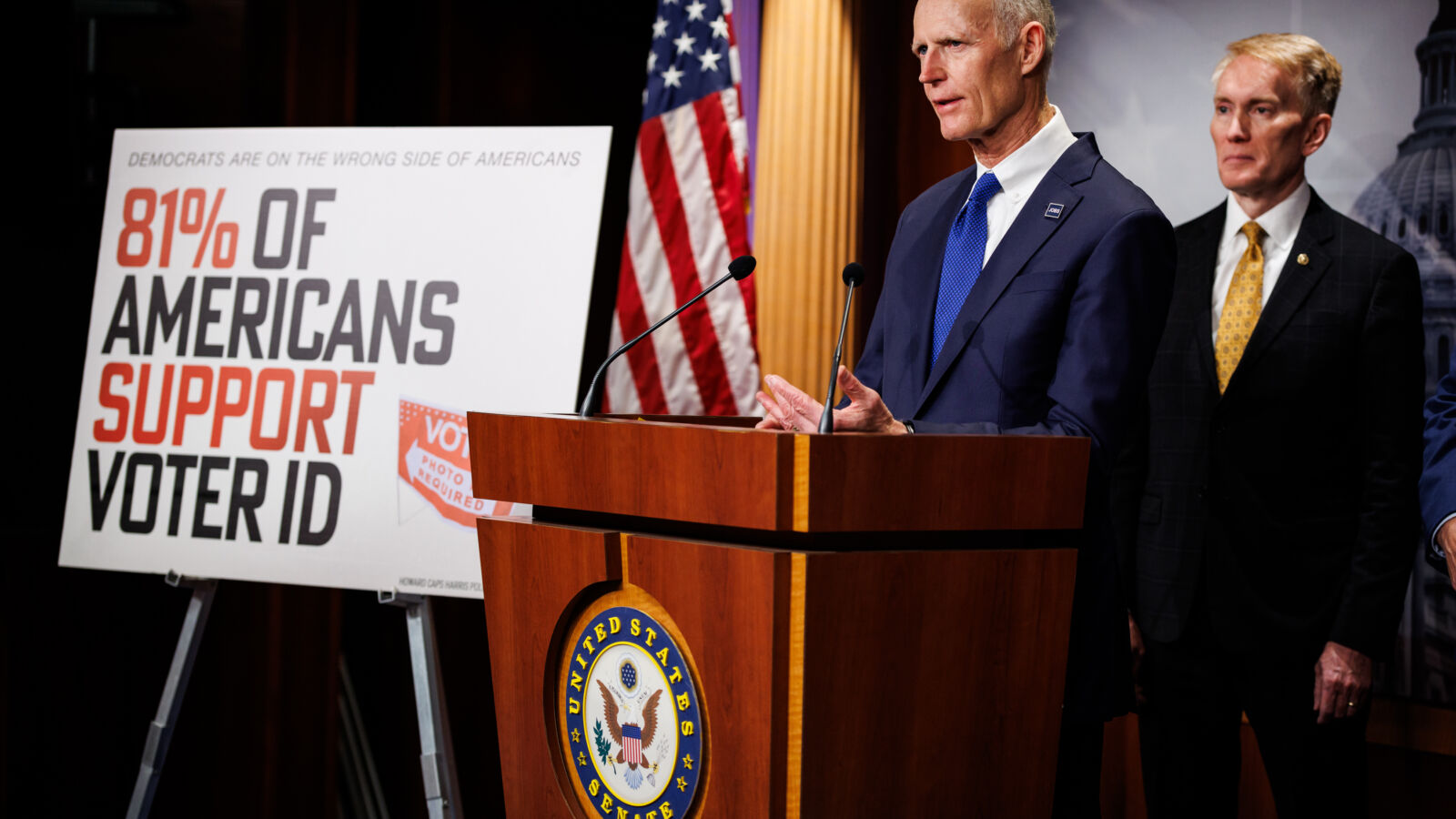
A trio of voter ID amendments in purple states won passage by at least 19 percentage points this November, in addition to a successful measure in Oklahoma that a majority approved during a low-turnout runoff election in August.
In Arizona, constitutional language for voter ID looks set to fail by 6-7 percentage points; and in California and Colorado, it is headed for defeat by more than twice that margin.
One might compare the two groups of states and settle on just one relevant difference: the first group, comprising Nevada, North Carolina, and Ohio, is reddish-purple-to-red; and the second group is purple-to-blue. But as the phrase goes, reading the fine print reveals a second — and perhaps more explanatory — distinction.
In 2026, as in all recent years, voter ID ballot measures that were simple — single-issue and brief, and in some cases specific — sailed to victory. This was the case in Nevada (a 25-percentage point margin), North Carolina (19), and Ohio (31). Only in states where the language has been loaded with unrelated policies have the initiatives failed.
Proposition 144 in Arizona was partly duplicative of existing law, in that the state has a voter ID statute for in-person voting which specifies the acceptable documentation. This would have placed the basic, general requirement in the state constitution, and extended it to mail voting. But Prop. 144 did not stop there: It contained multiple unrelated sections, including a ban on foreign nationals expending or contributing “money or anything of value to influence an Arizona election,” and a line allowing voters to request where their ballot is tabulated.
The California measure, Proposition 139, would have required local election offices to “use best efforts to verify citizenship attestations using government data” and publish annual reports on how well they are doing. This was in addition to the voter ID portion, which would have required mail voters — who represent the overwhelming majority of voters in the state — to list partial social security numbers or other numerical government identifiers on their ballots. The side dish of voter citizenship language allowed the California attorney general, a Democrat, to title Prop. 139 as the “Voter Identification, Citizenship Verification, and Registered Voter List Administration Initiative.” Such a description makes a proposal DOA in CA.
Colorado Amendment 84 was the outlier: It included only the requirement of partial government ID numbers on mail ballots. It was well-funded, yet it failed to receive 40-percent support. Perhaps that is a signal to voter ID backers in the big mail-voting states out west.
However, the case of Maine just last year fits with the Arizona and California examples. “Question 1 included many restrictions to voting beyond just a single question of should voters be required to provide one of a few permissible IDs when voting, including substantive changes to absentee voting,” Maine secretary of state Shenna Bellows, a Democrat, told Declare last November.
The aptness of the word “restrictions” aside, the note of bloat was accurate. This was the language that voters saw on the ballot:
Do you want to change Maine election laws to eliminate two days of absentee voting, prohibit requests for absentee ballots by phone or family members, end ongoing absentee voter status for seniors and people with disabilities, ban prepaid postage on absentee ballot return envelopes, limit the number of drop boxes, require voters to show certain photo ID before voting, and make other changes to our elections?
No surprise, the measure failed 36 percent to 64.
Contrast that with a straightforward voter ID amendment in Wisconsin earlier that year, which succeeded 63-37.
Or one in Nebraska in 2022, which coasted to victory 65-35.
Or the one in Arkansas in 2018: 79-21.
Nothing in this world is supported at a level of 100 percent. But it is essentially the success rate of ballot measures to require voter ID which do that — and only that.