

The clock was past the eleventh hour on Wednesday night when Congress was officially done with votes through Election Day 2026. But it had struck midnight for election legislation long before.
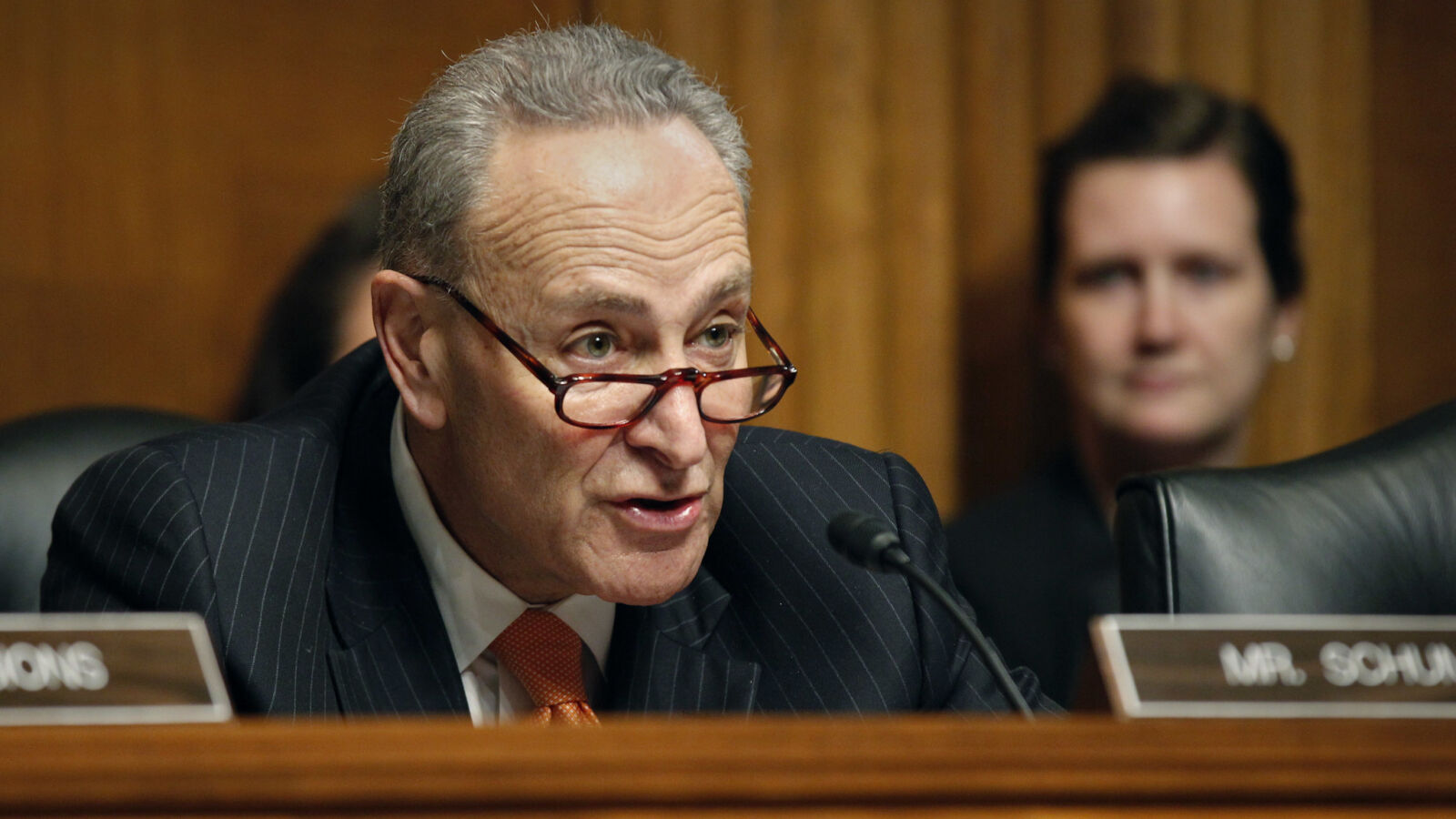
The Senate gaveled out of session just shy of the first of October, after a hopeless vote on a misplaced voter ID measure on Tuesday and a stump speech by the Democratic leader a day later, in which he took a final parting shot at many congressional Republicans’ top legislative priority.
“Republicans tried to jam through Trump’s SAVE Act, the most devious anti-voting rights legislation Trump ever dreamed up, to purge millions of voters from the rolls,” New York’s Chuck Schumer said from the Senate floor. “We told Republicans that the SAVE Act ain’t gonna happen. It didn’t.”
Neither did a photo ID requirement for in-person voting and a requirement of partial social security numbers to accompany mail ballots, which were included in an unrelated bill to restrict stock trading by members of Congress. The Stop Insider Trading Act failed to move forward in a party-line vote.
SAVE America has traveled a long and winding road to nowhere, to coin a Wheel of Fortune clue, best recounted in our piece from August when the Senate left it tabled (the only realistic choice of majority leader John Thune):
Legislating is often described as “sausagemaking.” Encased in point is the SAVE America Act.
In July, the House used a procedural trick to literally include it with unrelated legislation, the National Defense Authorization Act; the clerk, which is the official recordkeeper, was formally instructed to “add the text of [SAVE America], as passed by the House, as new matter” in the “engrossment,” or formal printing, of the NDAA sent to the Senate for its consideration. Also in July, the House approved a “budget resolution” — distinct from the continuing appropriations or “government funding” bills that Congress always seems to be debating just to keep the lights on — with instructions to the committee with jurisdiction over the SAVE America Act, House Administration, to propose policies within a certain budget range over the next decade. Those vague instructions were created specifically for SAVE America; “This Budget Resolution is our best shot at enacting as much of the SAVE America Act into law as possible,” Speaker Mike Johnson said upon the resolution’s passage.
This goes to show the extent to which fine print and creativity have been used to try moving the legislation — not that any of it has increased its chances in the short term. Lee insisted “it’s a matter of time” to FOX News on Saturday. It comes down to the Senate’s willingness to follow the House’s budget approach in September and if the maneuver passes muster with Senate rules. It is all very, very complicated, and irrelevant to election policy that would apply to this year’s Midterms.
Nothing came of the budget resolution negotiations, much less a vote. All while the party’s leaders retreated to their corners to sum up events and handicap November’s races.
President Trump again said that Democrats oppose the bill “because they want to cheat,” during the GOP’s Midterm convention in September. Jokingly or not, he also asked attendees to pledge “that I will go out with my family, my friends. I’ll do it any way. I don’t care if I’m registered or not. I’m going to try and cheat like hell, like they do.”
Schumer called his party’s chances of retaking control of the Senate “50-50” in an interview with Semafor published on Wednesday evening. “We’re right on the edge of winning. Two things could have us lose. One, they steal the election.”
Despite the alternating reckless and ominous rhetoric, most voters, including around half of Democrats, are supportive of a couple of the SAVE America Act’s central ideas, while the evidence continues to indicate that the numbers they’re designed to address, particularly noncitizen voting, are already somewhere between tiny and infinitesimal.

State of the Secretaries with Michael Adams