

Poll analysis · Declare / Cygnal · National
A Reversion to 2020-like Election Mistrust is Possible This November, Poll Finds
The newest Declare/Cygnal survey ahead of the Midterms shows that Republicans are concerned about close races without the SAVE America Act, while Democrats and independents have become less confident overall.
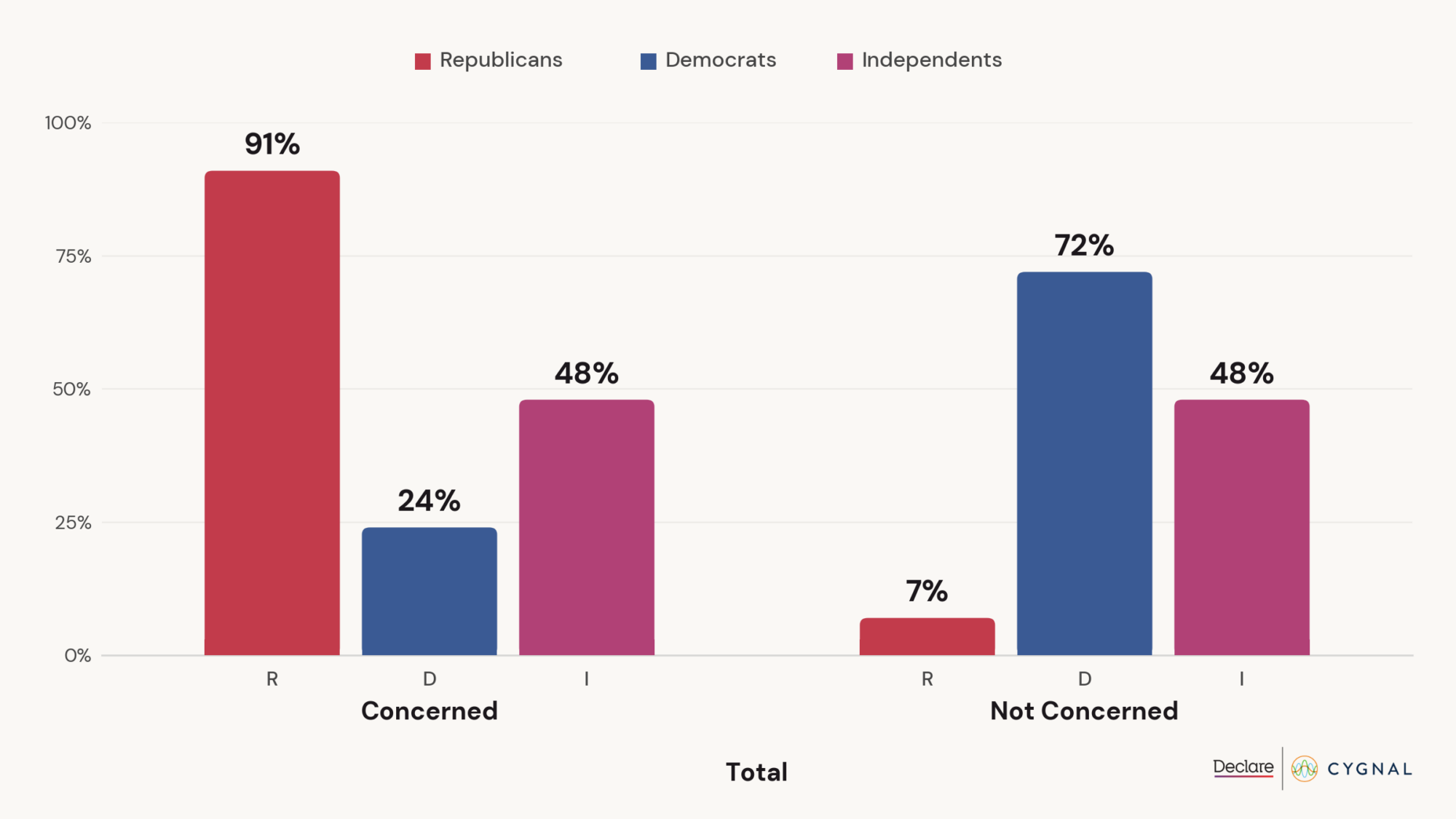
The environment is ripe for Republicans to call foul on narrow election losses this November, a national survey of likely voters conducted by Cygnal has found, as large majorities of them are worried about the effects of noncitizen voting on closely decided races and the lack of the SAVE America Act as a check.
The poll, fielded September 11-13, also continued the trend of showing that some Democrats and independents have lost confidence in the process from recent cycles, amid a relentless campaign from the Trump administration to alter election practices and extract voter data from states, and a year’s worth of ominous stories in the legacy and left-of-center press.
There is an unignorable partisan context to the Midterms: Democrats are expected to fare well nationally, and perhaps even produce a “wave” to retake control of both the House and Senate. In such a scenario, they are likely to win some elections that are both decisive and tight. And that’s where things could get hairy.
Ninety-one percent of Republican likely voters are concerned that noncitizen voters could swing a race for Congress decided by a few hundred votes. Seventy-three percent are “very” concerned, demonstrating the intensity of their feeling.
“There will be close races for Congress this year. It is inevitable that will happen,” Cygnal pollster Alex Tarascio told Declare. “When I see the water is receding, but then this response, there is a ‘snap-back’ mechanism,” he continued — referring to Republicans’ increased election confidence from 2020 to 2024, but now why they might be primed to lose it again in 2026.
Tarascio paired the finding about narrowly decided elections with one about the SAVE America Act: 71 percent of Republican respondents agree with the statement that, “Without the SAVE America Act, the results in November can’t be trusted,” over the statement that the results could be trusted regardless (15 percent).
“Those things tell me that Republicans are on a hair trigger,” Tarascio continued. “We could be right back where we were.”
Still, Republicans weren’t the only newsy demographic in the survey. By one measure of confidence, they’ve actually been gainers: 63 percent of them say that “widespread process errors or fraud that altered results” marred the 2020 election results, but only 40 percent have the same expectation of this November’s outcomes. For Democrats, those numbers have changed from 14 to 32, respectively — meaning far more comparable amounts of voters in the two parties now expect the worst.
“The reason that the overall number [of widespread process fears] is still high is that Democrats and independents have moved this,” Tarascio said. “The overall environment is that we thought that this was all over in 2024, and it's not. And that's a bummer.”
Regardless of the outcome, strong majorities overall favor a couple of individual election policies that have been central to political debate this year, with Democrats and independents responsible for pushing the numbers higher. Seventy percent overall prefer the idea of a voter ID requirement to the argument that “providing government-issued identification every time you vote is not necessary,” split among 94 percent of Republicans, 68 percent of independents, and 44 percent of Democrats. A yes/no question about requiring proof of citizenship produced a similar result: 73 percent overall say yes, broken down among 92 percent of Republicans, 74 percent of independents, and 52 percent of Democrats.
Those policies, and especially the packaging of them in a larger federal election bill (the SAVE America Act), have almost completely divided Republicans and Democrats in Congress. Just as they are almost completely divided on how to interpret the voting statistics, particularly fraud and noncitizen registration and voting, that the policies in theory would address. Beyond the Midterms, the status quo of how Americans active in the political process talk about elections appears unsustainable.
The toplines of the Cygnal survey can be found here.
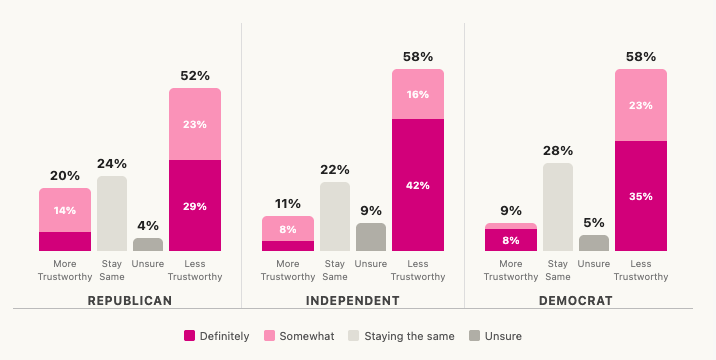 Cygnal · PennsylvaniaTo Pennsylvanians, Nation’s Elections Face Bipartisan Credibility Problem
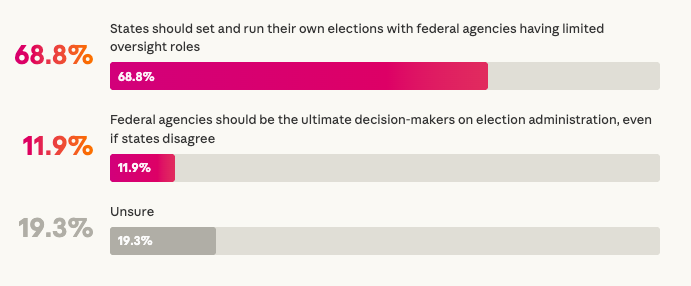 Opinion DiagnosticNC Republicans Favor State to Federal Election Control 63-18
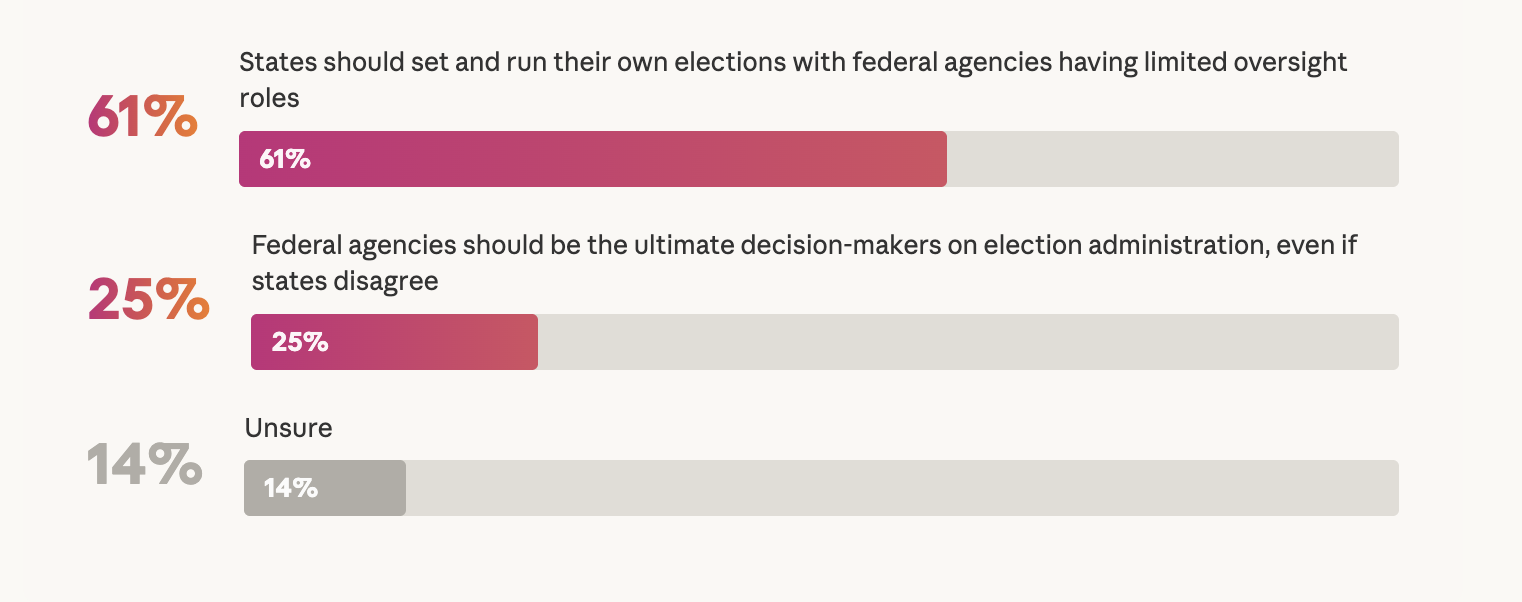 Deeproot AnalyticsState Control of Elections Favored in Giant National Survey
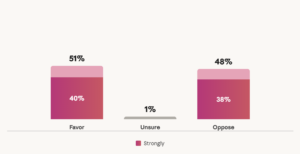 The Tarrance Group · NevadaNevada Voters 50/50 on Supreme Court Issue Argued This Week
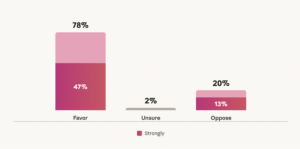 The Tarrance Group · Wisconsin78% of Wisconsinites Back ‘Pre-Processing’ of Mail Ballots
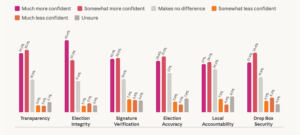 Cygnal · ArizonaKnowing the Process Builds Trust in Arizona, Declare/Cygnal Poll Finds
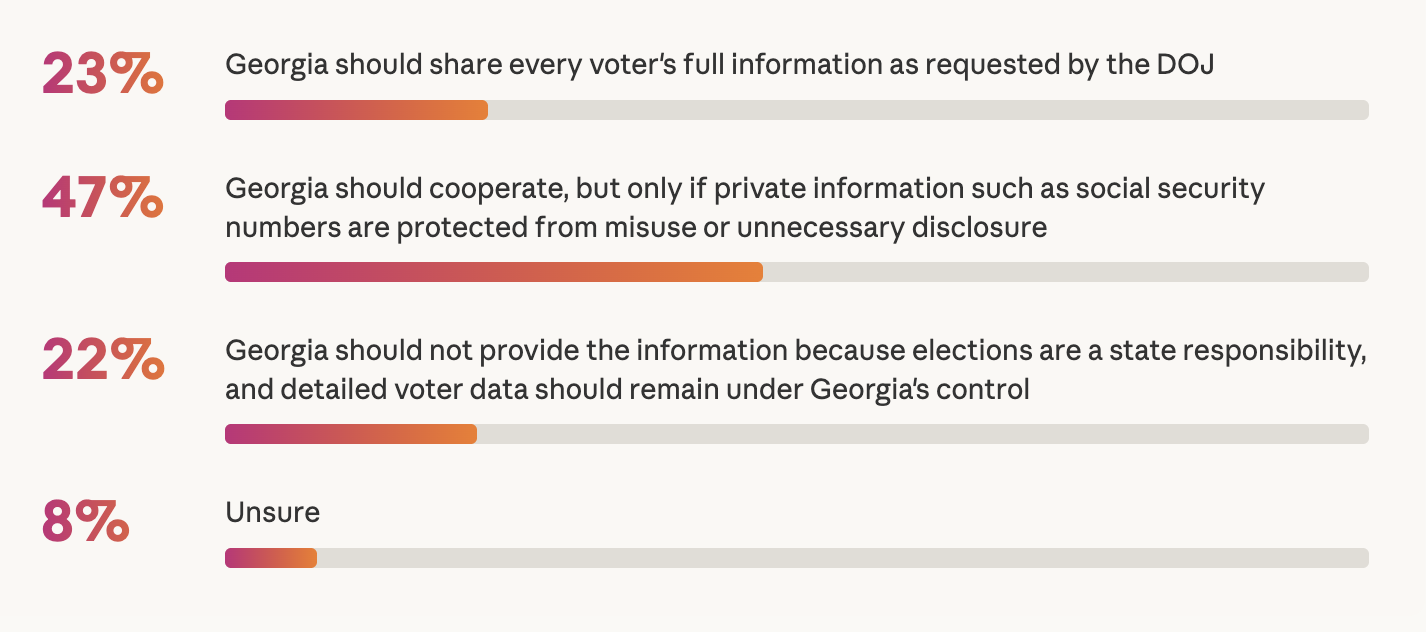 Cygnal · GeorgiaOnly 23 Percent of Republicans Support Full DOJ Voter Roll Request, Georgia Poll Finds