

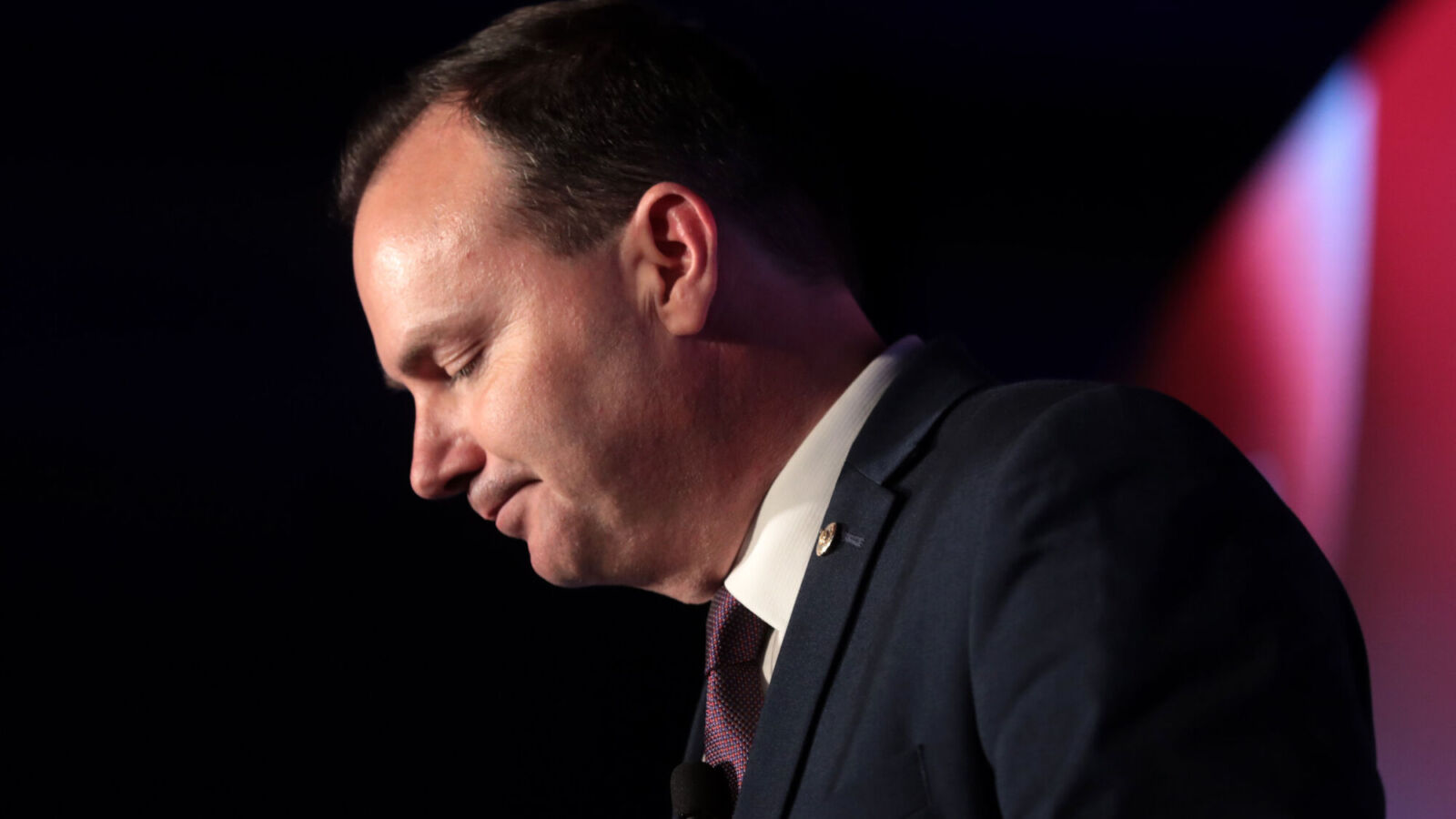
Despite much gnashing of teeth and mashing of keyboards, the Senate “gaveled out of session” early Saturday morning over the objection of little more than a tweet. Senator Mike Lee, the chief sponsor of the SAVE America Act, directed a social media post toward Senate Majority Leader John Thune in late July which stated: “I hereby object to any effort to put the Senate into recess in August—at least until such time as the Senate has passed the SAVE America Act—and hereby request a roll call vote.”
Such a request is required from the Senate floor, though, not cyberspace. When the time came, just shy of 5 a.m., neither Lee nor anyone else made it — and instead a voice vote of mostly “yeas” was sufficient to conclude a marathon day about a government funding bill and President Trump’s nomination for attorney general. (Lee and a handful of his colleagues entered written statements into the Congressional Record that read, “[I]f the motion for the Senate to adjourn . . . would have been a recorded roll call vote, I would have voted no.”)
By the time Congress reconvenes, it will be seven weeks to Election Day — far too late to approve any federal overhaul of elections that would apply this year (and it was too late last weekend, already). Here’s the latest on the SAVE America Act, what might be next for it, and what to expect about election discourse and policy more generally as the Midterms near.
SAVE America
Legislating is often described as “sausagemaking.” Encased in point is the SAVE America Act.
In July, the House used a procedural trick to literally include it with unrelated legislation, the National Defense Authorization Act; the clerk, which is the official recordkeeper, was formally instructed to “add the text of [SAVE America], as passed by the House, as new matter” in the “engrossment,” or formal printing, of the NDAA sent to the Senate for its consideration. Also in July, the House approved a “budget resolution” — distinct from the continuing appropriations or “government funding” bills that Congress always seems to be debating just to keep the lights on — with instructions to the committee with jurisdiction over the SAVE America Act, House Administration, to propose policies within a certain budget range over the next decade. Those vague instructions were created specifically for SAVE America; “This Budget Resolution is our best shot at enacting as much of the SAVE America Act into law as possible,” Speaker Mike Johnson said upon the resolution’s passage.
This goes to show the extent to which fine print and creativity have been used to try moving the legislation — not that any of it has increased its chances in the short term. Lee insisted “it’s a matter of time” to FOX News on Saturday. It comes down to the Senate’s willingness to follow the House’s budget approach in September and if the maneuver passes muster with Senate rules. It is all very, very complicated, and irrelevant to election policy that would apply to this year’s Midterms.
Other policy
The Senate did take a vote on a straightforward photo ID measure before wrapping up on Saturday morning, as part of a path forward on SAVE America and to get Democrats on record about a relatively less complicated, more popular idea. (80 percent of American adults supported photo ID for voting in a March CBS News poll, for example, whereas a plurality of 41 percent said they were unsure about SAVE America.) The bill applied to both in-person and mail-in voting, and specified the acceptable types of ID. All Republicans present (52) voted in favor and all Democrats present (46) opposed, leaving the legislation short of the 60 votes necessary to advance.
There remains noise on election policy outside Congress, though. A federal district court’s ruling against President Trump’s March executive order on elections, which directs federal agencies to create citizenship and eligible mail-voter lists, is pending emergency appeal at the Supreme Court. A response is likely within days. Separately, earlier this year the high court effectively preserved laws in several states that count late-arriving mail-in ballots as long as they’re postmarked by Election Day.
Where the conversation is headed
The Trump administration’s priorities for election reform have run repeatedly into legislative and legal barriers. While conservatives and congressional Republicans are united on voter ID, they aren’t about the more ambitious SAVE America Act. The court system has blocked not only Trump’s executive order provisions, but his near-nationwide attempt to obtain unredacted voter rolls from the states. These setbacks are sources of frustration, certainly — but they’re also potential talking points for why the country’s elections deserve mistrust, above and beyond healthy skepticism.
In recent weeks, Declare’s weekly editor’s note (if you haven’t subscribed, do so at the bottom of our homepage) has tried to find the language for acknowledging just how wildly the election process is described at either end of the political spectrum. There is a difference between making a reasoned judgment about who is “worse” and observing that too many public figures meet the criteria of “irresponsible:” whether it’s claiming that elections are “stolen,” describing the opposition’s election legislation consistently as 21st-century “Jim Crow,” or right and left taking turns doubting voting machines.
As always, extraordinary claims require extraordinary evidence — a threshold much higher than the one for bogus or overstated claims that keep flowing like a flooded stream. Where appropriate, we build a dam.
State of the Secretaries with Michael Adams