
In his longest comments on the Midterm results since Election Day, President Donald Trump told conservative 60 Minutes correspondent Ross Douthat that a variety of real-world factors sunk Republicans at the polls last week, in an interview aired on Sunday evening.
He blamed subpar candidates, poor White House messaging about the quality of the economy, the public’s negative opinion of the Iran War and its consequences — as well as his lack of presence on the November ballot — for a near-13-point Democratic victory nationwide in congressional races, the widest such margin since the Watergate backlash against Republicans in 1974.
“Number one, I was not on the ballot. But I campaigned hard for some people. And I think if I was on the ballot, it would’ve been a much different situation because you saw the level of popularity and love. There was love. I mean, we had massive rallies. Nobody’s ever seen rallies like that for Midterms. And there wasn’t one room that didn’t have thousands of people outside, couldn’t get in. So you had to transfer those voters, however, to candidates that they didn’t like,” Trump said. “But there’s something beyond that.”
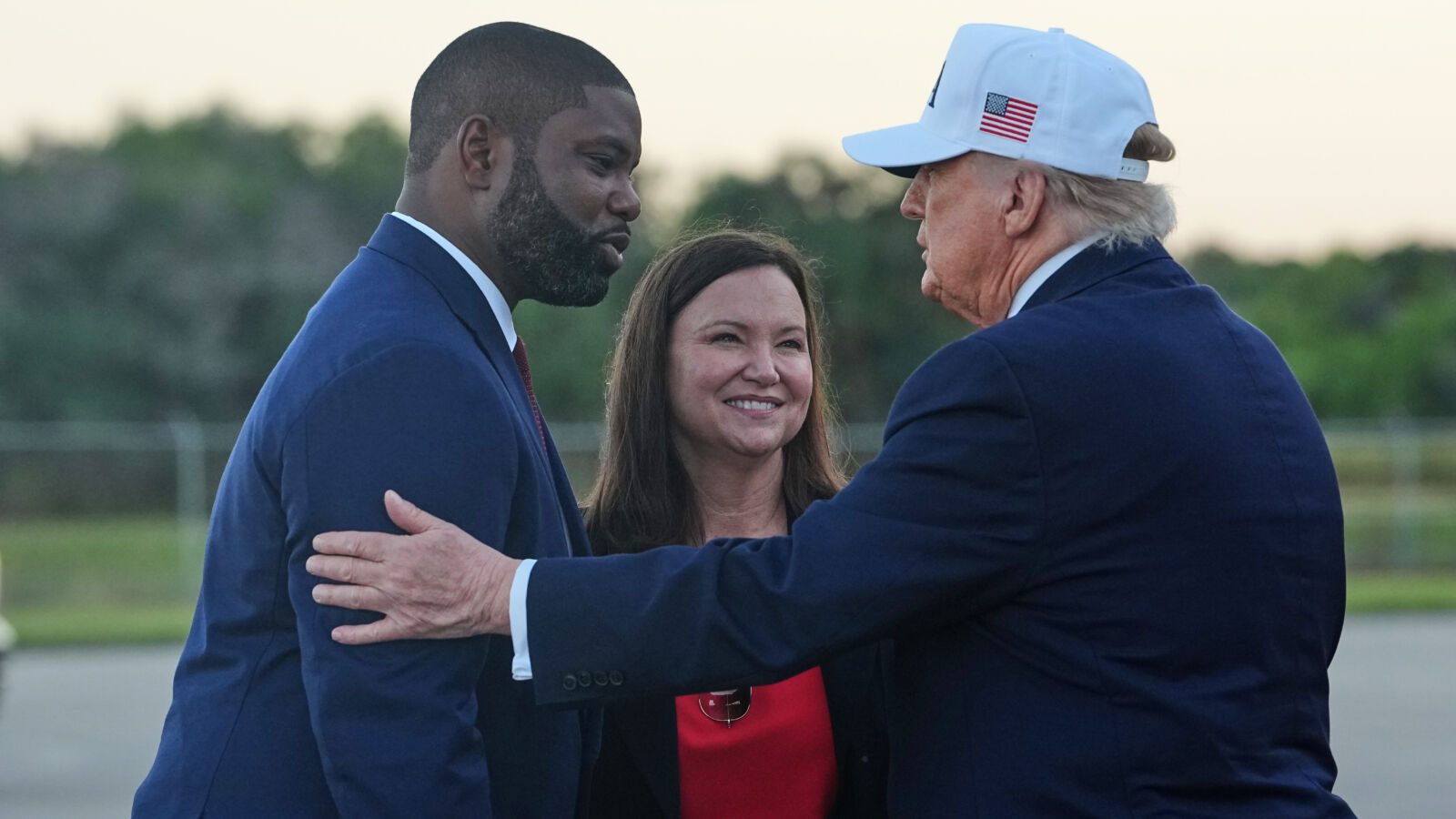
From there, Trump admitted that voters “didn’t like the [Iran] war … the fact that gasoline went up.” He claimed that his endorsement of Florida governor-elect Byron Donalds and incumbent Sen. Ashley Moody were crucial, because “had I not endorsed them, they wouldn’t have won, ’cause there was a wave.”
Overall, he assessed, “I think [my supporters] didn’t vote. I think in some cases, they didn’t like the candidates. And that’s, you know, their prerogative.”
Trump added that “bad messaging” on the economy cost the party, before he and Douthat moved on to different topics. One of those was the president’s plans for working with the new Democratic congressional majorities in 2027.
“You came out after the midterms. You congratulated the Democrats,” Douthat said.
“Correct,” Trump responded.
“You said that you were open to working with them,” Douthat continued.
“True,” Trump said.
On which particular issue, he said immigration.
The president’s explanation of several political and policy failures for Republicans’ performance this election cycle, as well as his confirmation of congratulating the Democrats and looking ahead to his work with them next year, were both far more thorough and entirely the opposite of his messaging about the Midterms on Truth Social. During the weekend, he shared a handful of posts from social media users who questioned the vote totals, and he expressed doubt about them on Monday morning.
“Does anybody really believe that this ‘Election’ was honest[?] How could the Polls be so wrong???” he posted. “Some early voting ‘dumps’ were so large that it was impossible to win, no matter how many people went to vote. It’s all about the machines, which are far more important than the voter!”
Trump’s posting lacks all credibility in comparison with his election-night comments to The New York Times and his 60 Minutes interview, as well as the straightforward concessions of Republican candidates nationwide even in the country’s most contentious states and districts. Texas lieutenant governor Dan Patrick went as far as to state, “This was a wave election in Texas and across the country. … It was a fair election, and I accept the majority will of the voters.”
The contrasting messages are typical of how politicians often use different media platforms: They usually try to sound reasonable before a general public audience on a program such as 60 Minutes, while appealing to their diehard bases of support on social media. Facts and reality are much stronger constraints on communication through the former than they are the latter — which is why the president’s post-Election Day comments should be evaluated in the context of where he’s made them, in addition to what he’s said.