

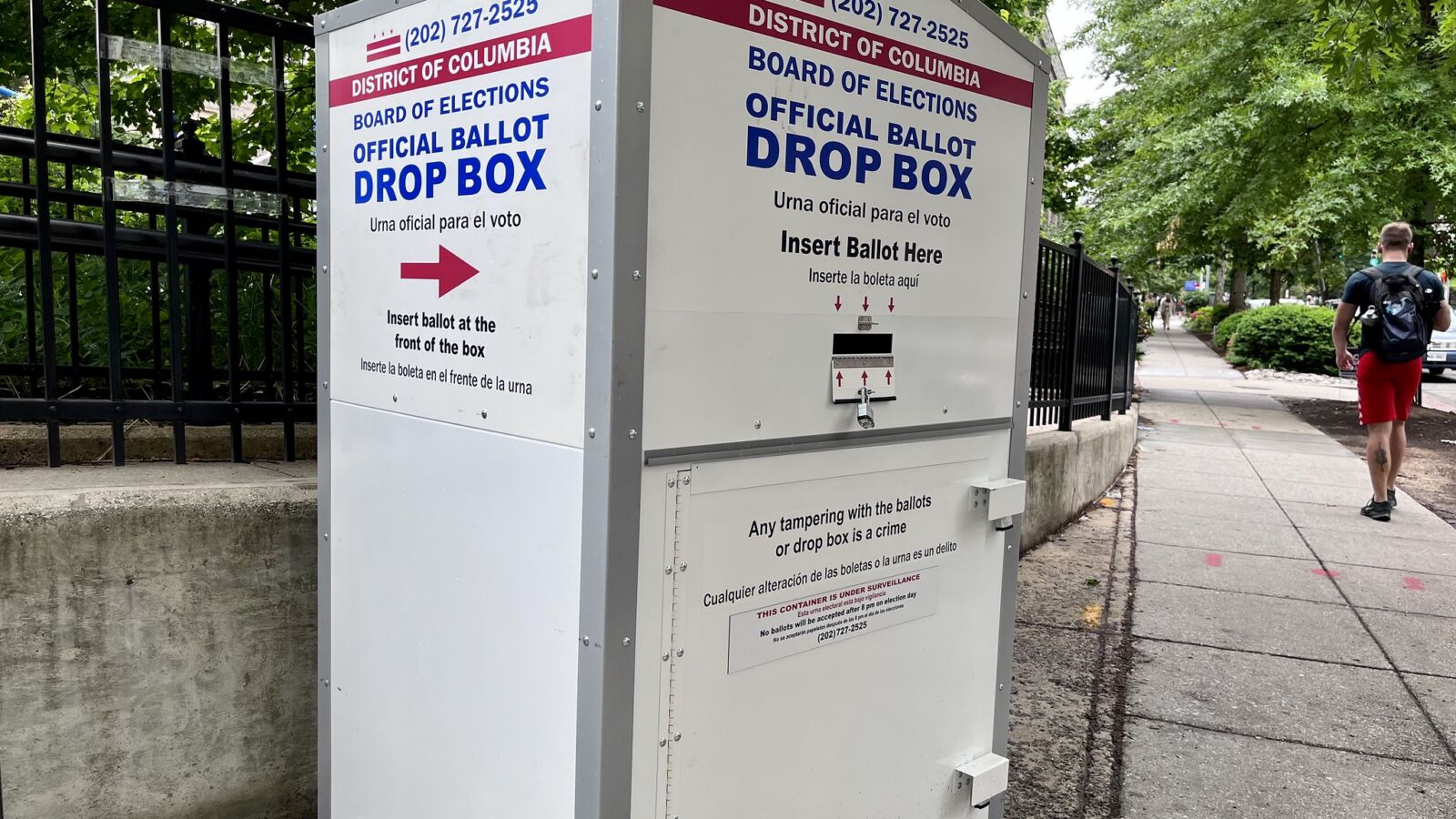
The general election is here. It’s only a little strange to type that during the first third of October, not November 3rd, because with the particular combination of variables that election officials must account for — funding, staffing, vendors and government partners, and local and state policies that determine the beginnings and deadlines for ballot receipt and counting — some period of early voting is probably good for swamped election offices and eager election watchers. Your mileage may vary as to how long. But as of this writing, it’s underway in several states, whether in person or by mail.
One of those states is Arizona, which needs no introduction as a locus of election controversy and conspiracism. Already, Maricopa County, home to Phoenix and to solar-hot takes about election administration, is unwarrantedly in the news. County recorder Justin Heap predicted several days ago that mail ballots would lag in circulation due to the closing of a local processing facility and a route that would take them out of state, through San Diego. Yet the Postal Service says that no Phoenix-area facilities have been closed and have “more than enough capacity to successfully process local election mail volume,” as reported by the local NBC affiliate.
“This is already a superheated environment with the election just a month away, so it is essential that election officials provide accurate information at all times. I urge Recorder Heap to choose his words more carefully so he does not add to voter confusion,” the Maricopa County Board chair, Republican Kate Brophy McGee, told the TV station.
Heap’s apparent error aside, his claim is one among many about the reliability of the USPS this election cycle, and it came from perhaps an unlikely source. Democrats uniformly opposed President Trump’s executive order to create new state-by-state requirements for mail voting and have been vigilant about service disruptions (for example, Michigan congresswoman Debbie Dingell during her state’s primary election). “Mail voting” itself has become coded as a left-right issue; if you’re on the former, you generally support it, and if you’re on the latter, you generally oppose it. But Heap is a Republican. So are 13 members of Congress who wrote the Postal Service in February to ask, in part, “[W]hat steps has USPS taken to ensure that critical First-Class Mail – such as election ballots . . . is processed, postmarked, and delivered in a timely manner?” Their particular concerns stem from a Postal Service reorganization of mail processing and distribution, its Regional Transportation Optimization (RTO) initiative, which inevitably delays some rural mail because of how it’s routed.
Altogether, election officials in general seem to want voters thinking about the variety of options available to them to cast a ballot. Dana Lewis, the recorder of Maricopa County’s neighbor Pinal County, and which voted for President Trump over former Vice President Harris 61-39 in 2024, told Declare that she continues to encourage early voters to use drop boxes for ballot return. (They are video-surveilled, beyond what is required by Arizona’s election laws.)
“Ultimately, our goal is simple: give Pinal County voters multiple secure, reliable, and convenient ways to make sure their ballot gets where it needs to go and is received on time,” she added.
Amy Burgans, the clerk-treasurer of Douglas County in Nevada, told Declare that she’s also reminding voters of their options. “Yes, in Douglas County, we are encouraging people to use drop boxes. We are stating that if they have to mail their ballot, to mail it early and not wait until the week of the election.”
Officials in other states with a high volume of mail ballots have gone even further, indicating a preference. “We’re really emphasizing to our voters that they use the drop box rather than the mailbox,” Washington secretary of state Steve Hobbs told CNN, making a direct contrast between the two. “We’re not really encouraging people to use the USPS to get their ballot here,” said Evelyn Mendez, the registrar of voters of Sonoma County, Calif., to local media.
Stressing about mail ballot return is a biannual tradition, even as the Postal Service touts its timeliness election cycle by election cycle, as it did in 2024. A recent Marist University poll with NPR and PBS found that public trust in the agency’s fulfillment of election mail has receded to COVID-year levels. At this point, consider yourself informed of narratives about the mail vote from all corners this year — ideological ones as well as purely administrative ones.
Fortunately, “easy to vote and hard to cheat” remains an accurate description of elections across the country regardless. Whatever your position on Trump’s executive orders and the SAVE America Act, implementing them amid a national election year would’ve likely caused complications for all types of voters — all the way from mail voters to in-person Election Day voters. The incidence of noncitizen voting during recent years, as the Trump administration dedicated a striking amount of law enforcement resources to finding it during the summer, remains evidently low. Human and software errors in election systems have popped up in certain states, but they’ve happened in New Jersey and Oregon just as they have in Louisiana and Texas — and even in Maricopa County. Each circumstance warrants the corrective and preventive measures and oversight commensurate with the severity of the issue.
There isn’t much more to say right now. As it’s been put to me by more than one election official, paraphrasing: “If you felt good about the elections in 2024, you can feel good about them in 2026.” As long as local and state officials can do their work as they normally do, that guidance will hold up.
Schumer’s ‘Steal the Election’ Comment Is the Highest Hypocrisy